Get a custom solution for free
-
Phone
-
E-mail
-
Whatsapp
-
Wechat

Global sourcing often begins with a practical question: will the component perform after thousands of kilometers, temperature changes, and repeated handling? For mounting signs, fixtures, shower accessories, and light industrial tools, a Rubber Suction Cup can offer simple, reusable holding power without drilling or permanent adhesives. Its value depends on more than a low unit price. Rubber formulation, cup diameter, wall thickness, surface finish, and packing quality all influence real performance.
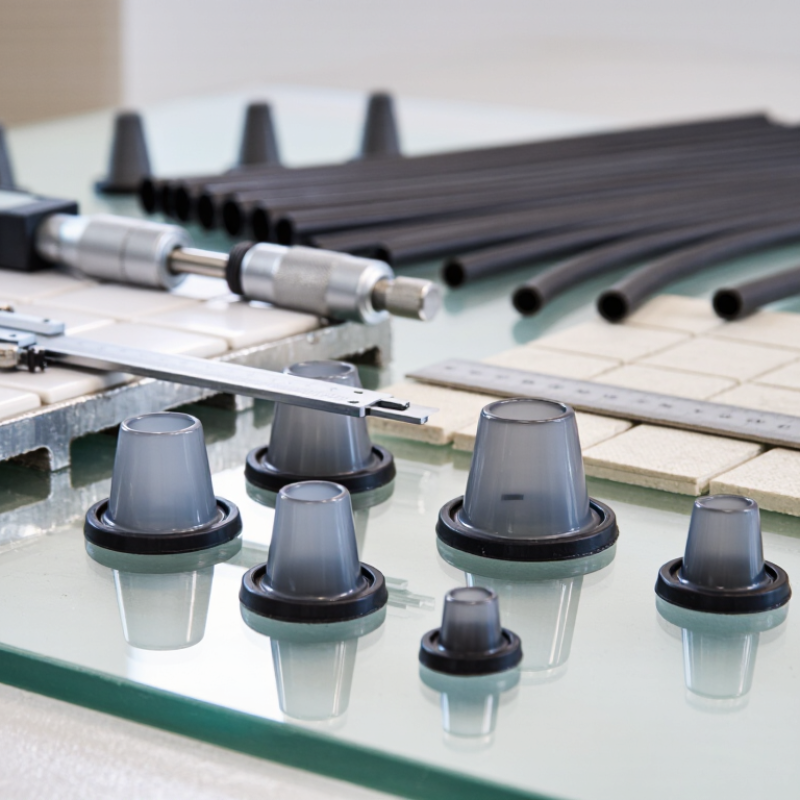
Experienced buyers inspect samples on glass, tile, painted metal, and textured plastic. They record holding time, release behavior, odor, deformation, and performance after repeated use. A reliable supplier should explain material choices, production tolerances, mold maintenance, batch identification, and inspection methods. Independent test reports can strengthen confidence, but buyers should verify their scope and testing conditions. A report is not a guarantee.
Global sourcing also requires clear communication. Drawings should state dimensions, hardness targets, load direction, packaging, labeling, and acceptable defects. Moisture, dust, and prolonged compression can affect rubber during storage. Regional climate and transport conditions deserve attention. Small details matter.
No component is perfect. A suction cup may fail on porous, dirty, oily, or heavily textured surfaces. That limitation should appear in product guidance, not hidden in sales language. Comparing samples from several factories reveals differences that catalogs often miss. Careful qualification, honest documentation, and realistic testing help buyers choose a Rubber Suction Cup that fits the application, supplier capability, and long-term sourcing plan.
Why Choose Rubber Suction Cups for Global Sourcing?
Rubber suction cups rely on a simple pressure difference. The holding force follows F ≈ ΔP × Contact Area. ISO 2533 defines standard sea-level pressure as 101.325 kPa. NASA Glenn Research Center reports a similar value, about 101.3 kPa. A 50-millimeter cup has roughly 0.00196 square meters of contact area. Under a perfect seal, 20 kPa of vacuum could create approximately 39 newtons of force. That equals about 4 kilograms under ideal conditions.
Real applications are less generous. Dust, surface texture, rubber aging, and temperature reduce effective pressure. A smooth glass panel may seal quickly; unfinished wood may leak through tiny surface channels. Material selection matters, too. Elastomers must resist compression set, ozone, and repeated flexing. ISO 2230 provides guidance for storing rubber products, including protection from heat, light, and ozone.
Field testing should measure pull-off force on the actual substrate. Do not rely only on catalog calculations. A 2023 technical review from the International Rubber Study Group noted continuing demand for durable, application-specific rubber components, but general market figures cannot predict one cup’s performance. That is where sourcing teams can be overly confident. Test after cleaning, temperature cycling, and repeated attachment. Leave a margin for imperfect surfaces. Conservative assumptions usually cost less than a dropped load.
Rubber suction cups create holding force when the pressure inside the sealed cup is lower than the surrounding atmospheric pressure. The ideal holding force can be estimated with F ≈ ΔP × A, where F is force in newtons, ΔP is pressure difference in pascals, and A is the effective sealed contact area in square metres.
| Nominal Cup Diameter | Effective Contact Area | Assumed Pressure Difference | Ideal Holding Force | Reference Working Load at 3:1 Safety Factor | Typical Sourcing Use |
|---|---|---|---|---|---|
| 20 mm | 314 mm² | 60 kPa | 18.8 N | 6.3 N | Lightweight positioning, small covers, labels and compact fixtures |
| 40 mm | 1,257 mm² | 60 kPa | 75.4 N | 25.1 N | Small panels, glass handling aids and light-duty temporary mounting |
| 60 mm | 2,827 mm² | 60 kPa | 169.6 N | 56.5 N | Medium panels, smooth sheet materials and reusable fixtures |
| 80 mm | 5,027 mm² | 60 kPa | 301.6 N | 100.5 N | Large smooth surfaces requiring higher theoretical holding capacity |
| 100 mm | 7,854 mm² | 60 kPa | 471.2 N | 157.1 N | Large-area handling, temporary supports and industrial positioning |
Calculation basis: contact area A = πd²/4 and F = ΔP × A. The 3:1 reference working load is a conservative design example, not a certified rating. Actual performance depends on surface texture, cleanliness, leakage, rubber hardness, temperature, loading direction, peel forces and the condition of the cup.
| Rubber Type | Typical Continuous Temperature Range | Key Advantages | Common Limitations | Suitable Global Sourcing Applications |
|---|---|---|---|---|
| Natural Rubber (NR) | Approximately −40°C to +80°C | High elasticity, strong resilience and good conformability | Lower resistance to ozone, sunlight, oils and long-term outdoor exposure | General-purpose suction cups used indoors on clean, smooth surfaces |
| Silicone Rubber | Approximately −60°C to +200°C | Wide temperature range, good weathering resistance and stable flexibility | Lower tear strength and abrasion resistance than many general-purpose elastomers | Cold-chain, food-contact-oriented designs, laboratory equipment and temperature-variable environments |
| Nitrile Rubber (NBR) | Approximately −30°C to +100°C | Good resistance to mineral oils, fuels and many lubricants | Limited resistance to ozone and outdoor weathering unless specially compounded | Industrial fixtures and applications exposed to petroleum-based fluids |
| EPDM Rubber | Approximately −45°C to +150°C | Strong resistance to ozone, weathering, water and many polar chemicals | Poor compatibility with petroleum-based oils and fuels | Outdoor mounting, water-related equipment and weather-exposed applications |
Temperature ranges are typical material guidelines. The approved operating range must be confirmed for the specific compound, wall thickness, surface, load and service environment.
| Condition | Expected Effect on Holding Force | Recommended Sourcing or Design Consideration |
|---|---|---|
| Clean, smooth, non-porous glass or polished metal | Usually favorable for air-tight sealing | Use as the baseline surface for comparative testing and quality inspection |
| Dust, oil, moisture or release agent on the surface | May increase leakage and reduce holding time | Specify cleaning instructions and verify performance after realistic contamination exposure |
| Rough, porous, textured or scratched surface | Air leakage can significantly reduce vacuum force | Consider a larger cup, softer sealing lip, multiple cups or a mechanical backup |
| Vertical load with sliding or shear force | Available capacity is lower than the straight-pull theoretical force | Evaluate friction, surface finish and load direction rather than using the axial calculation alone |
| Peel load or off-center load | Can release the sealing edge and cause rapid loss of vacuum | Use a rigid support, multiple attachment points or a mechanical retention feature |
| Long dwell time or temperature cycling | Material relaxation and gradual leakage may reduce holding time | Perform duration testing at minimum and maximum expected temperatures |
| Evaluation Dimension | Recommended Specification or Test Point | Reason for Importance |
|---|---|---|
| Dimensional consistency | Measure cup diameter, lip thickness, height and mounting interface against agreed tolerances | Consistent geometry supports repeatable sealing and predictable assembly |
| Rubber compound | Confirm elastomer type, hardness range and colorant or additive requirements | Compound selection affects flexibility, temperature capability and chemical resistance |
| Vacuum retention | Test holding time under specified load, surface condition and temperature | Static pull force alone does not show leakage or long-term performance |
| Load direction | Test axial pull, shear and peel conditions separately | Real installations rarely apply a purely vertical or purely axial load |
| Packaging and storage | Protect from ozone, direct sunlight, excessive heat, oils and deformation during transport | Improper storage can age or permanently deform rubber before use |
| Traceability | Record production lot, material specification, inspection results and test conditions | Traceability supports consistent replenishment and international quality control |
All values shown are engineering reference data based on idealized calculations or typical elastomer characteristics. Product qualification should use samples tested under the exact surface, load, temperature and service conditions of the intended application.