Best Rubber Isolation Mounts for Optimal Vibration Control?
In today’s industrial landscape, managing vibrations is crucial. Effective vibration control can enhance equipment longevity and improve safety. Rubber Isolation Mounts play a pivotal role in this process. These mounts absorb shocks and vibrations, providing a buffer between machines and their foundation. This is essential for maintaining operational efficiency.
Choosing the right Rubber Isolation Mounts can be challenging. Options vary based on load capacity, material, and design. Some mounts excel in noise dampening, while others focus on heavy-duty applications. It’s important to assess specific needs. Do you prioritize flexibility or strength? Understanding these factors is vital in making an informed decision.
Despite their advantages, not all mounts perform equally well in every scenario. Installation may require adjustments or modifications. Misselected mounts can lead to insufficient vibration control. This reflection prompts a careful evaluation of choices. Ultimately, investing time and effort into selecting the best Rubber Isolation Mounts will yield benefits in productivity and equipment preservation.
Understanding Rubber Isolation Mounts: Definition and Purpose
Rubber isolation mounts are critical components in managing vibration in various applications. These mounts effectively absorb vibrations, providing a cushion between machinery and its surroundings. According to a study by the American Society of Mechanical Engineers (ASME), effective vibration control can enhance machinery life by up to 40%. This statistic underscores the importance of selecting the right isolation mounts for optimal performance.
Understanding the purpose of rubber isolation mounts involves their role in both comfort and safety. For instance, in industrial and automotive settings, these mounts reduce unwanted noise and vibrations that can lead to operator fatigue. Research published in the Journal of Sound and Vibration shows that vibrations can cause stress levels to rise significantly. The study suggests that mitigating these vibrations is crucial for improving work environments.
However, the effectiveness of rubber isolation mounts is not guaranteed. Factors like environmental conditions and material degradation can affect performance. Even the most reliable mounts may require periodic assessment to ensure they meet application needs. This highlights the importance of ongoing evaluation to maintain optimal vibration control over time.
Key Benefits of Rubber Isolation Mounts in Vibration Control
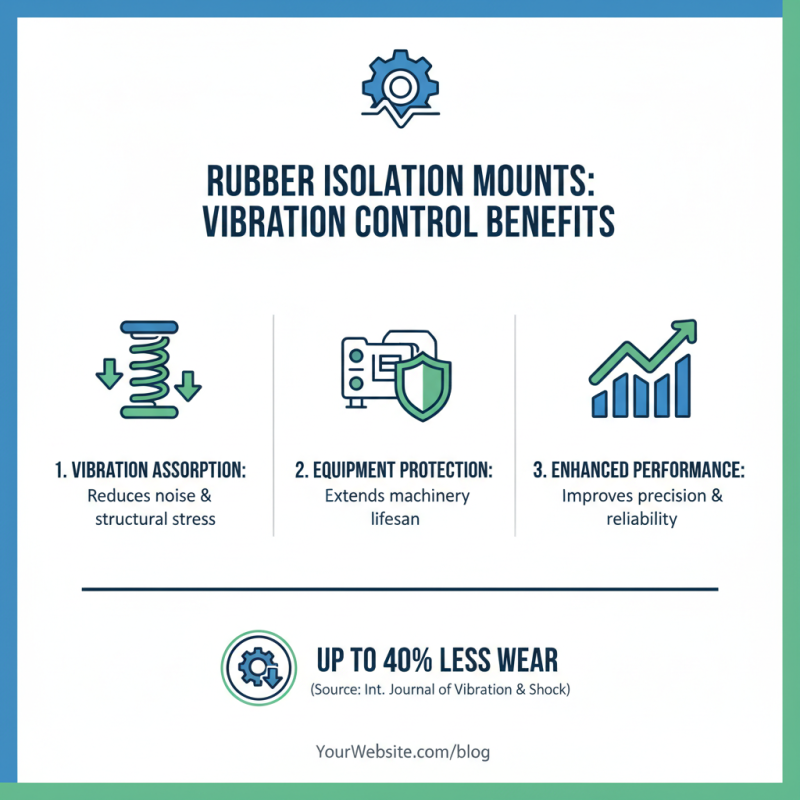
Rubber isolation mounts play a crucial role in effective vibration control across various industries. These mounts absorb vibrations, protecting sensitive equipment and enhancing overall performance. According to a report by the International Journal of Vibration and Shock, proper vibration isolation can reduce machinery wear by up to 40%. This data highlights the importance of selecting the right isolation mounts.
Key benefits of rubber isolation mounts lie in their ability to dampen noise and vibration. By utilizing advanced materials, these mounts maintain structural integrity while reducing the transmission of vibrations. A study by the National Institute of Standards and Technology found that vibration isolation systems can improve machine lifespan by 25%, directly impacting maintenance costs. Such findings emphasize the need for careful selection based on specific applications.
However, there are challenges when implementing these mounts. Not all rubber materials perform equally under varying temperatures or loads. Some may degrade quickly, leading to increased maintenance. It is essential to understand the specific requirements of your environment to avoid costly mistakes. The right isolation mounts can significantly enhance operational efficiency, but choosing incorrectly can result in frustrating setbacks.
Factors to Consider When Selecting Rubber Isolation Mounts
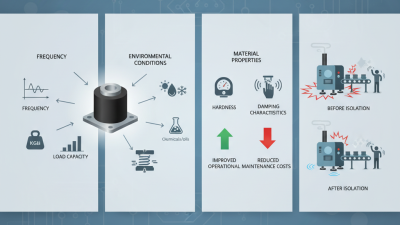
When choosing rubber isolation mounts, several critical factors come into play. The material's hardness is one of the most important aspects. Softer mounts typically provide better shock absorption, while harder mounts can support heavier loads. Consider the environment as well. Temperature, humidity, and exposure to oils can affect rubber's performance. Selecting a material that withstands these conditions is essential.
Size and load capacity are also crucial. Assess the weight of the equipment and the mounting requirements. A mismatch can lead to failure or inadequate vibration control. You should also think about the frequency of the vibrations you are dealing with. Different mounts are optimized for various vibration ranges.
Lastly, installation ease can influence your decision. Some mounts require more effort to install, which can affect downtime. It's important to take a holistic view of your needs. Evaluate all these factors to find the best solution for effective vibration control.
Best Rubber Isolation Mounts for Optimal Vibration Control
| Dimension |
Material Type |
Load Capacity (lbs) |
Frequency Range (Hz) |
Features |
| 2" x 2" |
Natural Rubber |
200 |
10-50 |
High durability, Oil-resistant |
| 3" x 3" |
Neoprene |
150 |
5-40 |
Good vibration isolation, Weather resistant |
| 4" x 4" |
EPDM |
300 |
8-45 |
Excellent heat resistance, Long lifespan |
| 5" x 5" |
Silicone |
180 |
10-60 |
Highly elastic, Uv resistant |
Top Brands and Models of Rubber Isolation Mounts Available Today
When it comes to managing vibrations in machinery, rubber isolation mounts are crucial. They dampen vibrations, reducing wear and tear on equipment. Various brands offer high-quality options. Look for mounts that provide effective vibration control while being durable.
Tips: Consider the load capacity of the mount. Choose one that can support your equipment's weight.
Some top models feature designs that allow for easy installation. Remember to check the dimensions before purchasing. Measurements should match your application for optimal performance.
Tips: Always review customer feedback. Real user experiences can reveal hidden issues or advantages.
Selecting the right rubber isolation mount enhances equipment longevity. Many users overlook the significance of proper mount placement. An often ignored aspect, yet critical for effective vibration control.
Top Rubber Isolation Mounts for Vibration Control
Installation Tips for Effective Use of Rubber Isolation Mounts
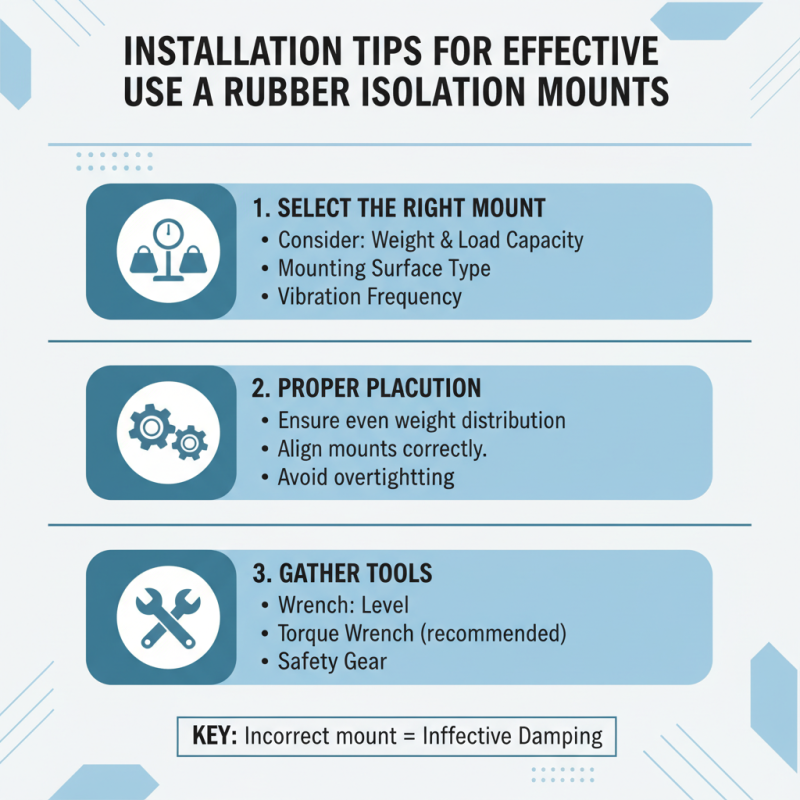
When installing rubber isolation mounts, proper execution is key for optimal vibration control. Begin by selecting the right size and type of mount for your specific application. Consider factors like weight and mounting surface. Using an incorrect mount can lead to ineffective vibration dampening. Gather basic tools such as a wrench and level before starting.
It’s essential to clean the installation area thoroughly. Dirt and debris can affect mount adhesion. The surface must be dry to ensure proper contact. Position the mounts accurately, aligning them with your machine’s weight distribution. This might seem simple, but misalignment can result in increased vibration.
Once mounts are in place, check them regularly for wear and tear. Rubber can degrade over time, especially in harsh environments. Be prepared to adjust or replace mounts if vibration levels increase. Vigilance in maintenance ensures long-term effectiveness. Understanding these steps may require trial and error, but they enhance overall performance significantly.