How to Choose the Best Rubber Suction Cup for Your Needs?
Choosing the right Rubber Suction Cup can be a challenging task. With numerous options available, it’s easy to feel overwhelmed. These versatile tools are often used in various settings, from home to industrial applications.
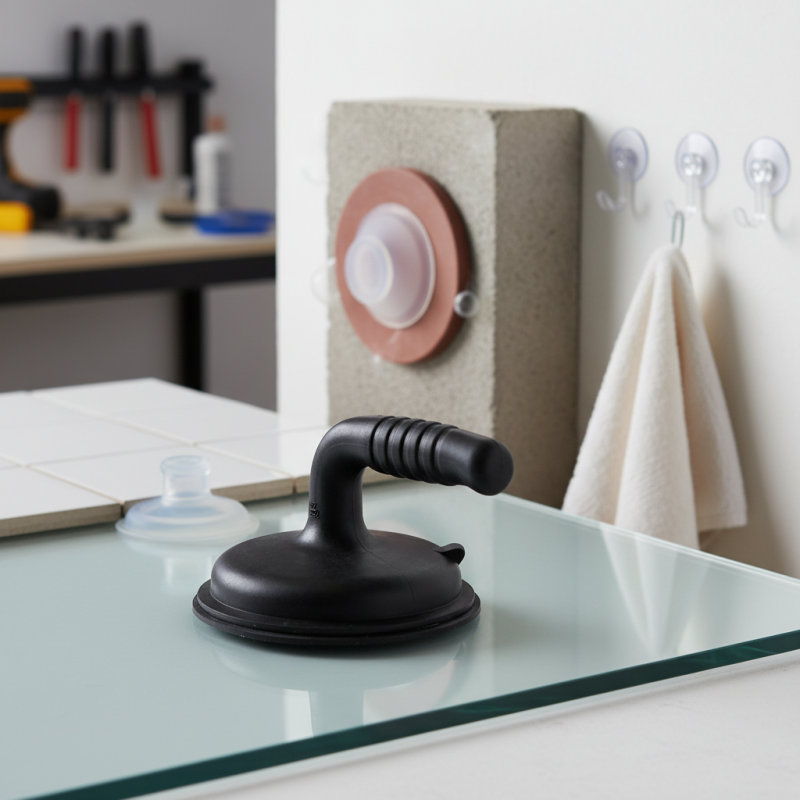
When selecting a Rubber Suction Cup, consider the material and size. Different applications require different levels of strength and flexibility. For instance, a heavy-duty cup might be necessary for lifting glass, while a smaller cup could suffice for lightweight tasks.
Pay attention to the surface texture as well. A smooth, flat surface will yield better suction compared to a rough one. It’s also essential to reflect on your specific needs. Are you using it for temporary placements or long-term solutions? Taking the time to evaluate your requirements can prevent future issues. Remember, the perfect Rubber Suction Cup may not exist for every scenario.
Understanding the Different Types of Rubber Suction Cups Available
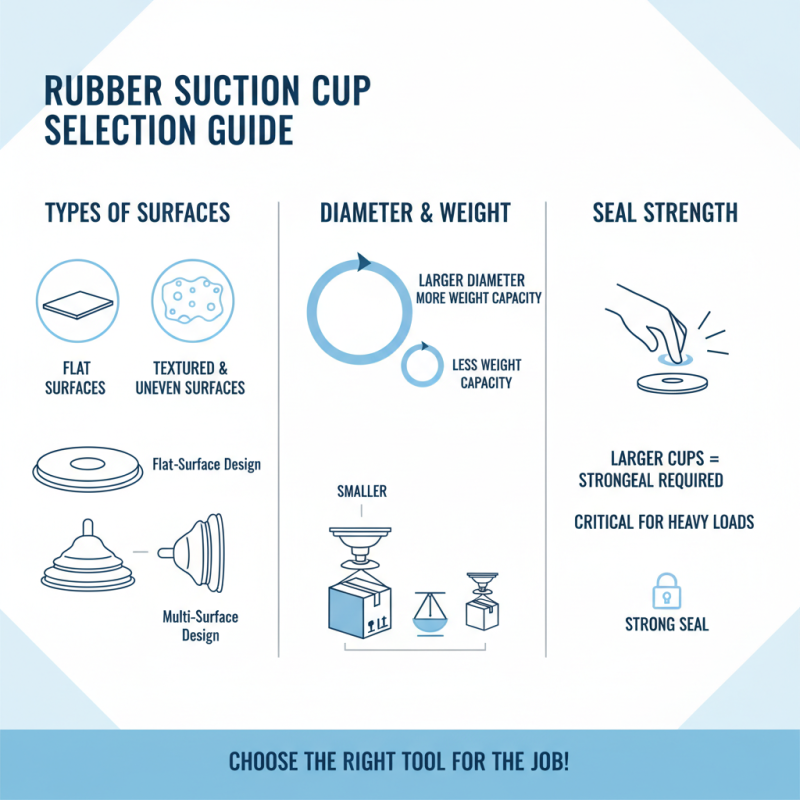
When selecting a rubber suction cup, it's essential to understand the types available. There are various designs, each suited for different tasks. For example, some suction cups are meant for flat surfaces, while others can handle textured or uneven materials. Their diameter also matters; larger cups may hold more weight but require a stronger seal.
Tips: Consider the environment. If your suction cup will be exposed to heat or moisture, ensure it can withstand those conditions. Testing a few options can reveal unexpected results. You might discover that a smaller cup performs better than a larger one due to its contouring ability.
Another type worth noting is the multi-purpose suction cup. These are versatile and can be used in several applications. However, they might not excel in any particular task. User reviews often highlight this feature. Don't hesitate to compare experiences. Be open to experimenting until you find what works best for your specific need.
Key Factors to Consider When Selecting a Rubber Suction Cup
When selecting a rubber suction cup, consider the diameter. Larger cups can hold more weight. However, they may not fit all surfaces. Smaller cups are easier to handle but could struggle with heavy loads. Test the size before making a final decision. Ensure it meets your needs.
The material of the suction cup is crucial. A softer rubber can conform better to uneven surfaces. But it may not last as long. On the other hand, firmer rubber offers durability. Yet, it might not create a tight seal on rough surfaces. You might need to experiment to find the right balance.
Surface texture is another key factor. Smooth surfaces work well with suction cups. But textured or porous materials can lead to air leaks. Consider the application carefully. A failure here can lead to frustrating results. Try out different setups and evaluate their effectiveness.
Rubber Suction Cup Selection Factors
Examining Material Durability and Suitability for Various Surfaces
When choosing a rubber suction cup, material durability plays a crucial role. The best cups are made from natural rubber or silicone. Natural rubber offers excellent grip and can withstand temperatures up to 85°C. In contrast, silicone is often more resistant to UV light and extremes of temperature. Studies show that silicone suction cups maintain their performance even after prolonged exposure to harsh environments.
Surface compatibility is another essential factor. Smooth, non-porous surfaces are ideal for suction cups. Reports indicate that suction cups adhere best to glass and polished metal. In contrast, textured or porous surfaces yield weak adhesion. Consequently, testing on the desired surface is key. It is not uncommon for users to find their suction cups fail in unexpected situations due to surface mismatch.
Even with high-quality materials, occasional failures can occur. Environmental factors like dust or moisture can compromise adhesion. Users should perform regular checks. Despite the promise of durability, a suction cup's effectiveness depends on various elements. Paying attention to these details can significantly enhance the functionality and reliability of your choice.
Common Applications and Uses of Rubber Suction Cups in Daily Life
Rubber suction cups are versatile tools in everyday life. They are found in homes, offices, and even automotive settings. Their common applications include holding objects in place, creating seals, and enabling easy installation of items. A study from the Industrial Rubber Products Association highlighted that approximately 30% of consumers use suction cups for home improvement projects.
In kitchens, suction cups help secure cutting boards, making food preparation safer. In bathrooms, they hold toiletries, keeping surfaces clutter-free. Many people use them for hanging decorations or tools. This convenience often goes unnoticed until something fails. For instance, a poorly designed suction cup can peel off easily, leading to frustration.
In automotive applications, suction cups are used to mount devices like GPS units. While effective, their performance can vary based on surface conditions. A report by the American Society of Mechanical Engineers indicated that the adhesion strength can be reduced by 20% if surfaces are not clean. Understanding these factors is essential when selecting the right rubber suction cup for specific needs.
How to Choose the Best Rubber Suction Cup for Your Needs? - Common Applications and Uses of Rubber Suction Cups in Daily Life
| Application |
Size (Diameter) |
Material |
Holding Force (lbs) |
Temperature Range (°F) |
| Window Mounting |
4 inches |
Natural Rubber |
15 lbs |
-20 to 150 |
| Bathroom Accessories |
3 inches |
Silicone |
10 lbs |
-40 to 220 |
| Automotive Use |
6 inches |
EPDM |
25 lbs |
-30 to 140 |
| Industrial Applications |
8 inches |
Buna-N |
30 lbs |
-10 to 200 |
| Lifting and Handling |
5 inches |
Neoprene |
20 lbs |
-20 to 180 |