How to Choose the Right Rubber Isolation Mounts for Your Needs?
Choosing the right Rubber Isolation Mounts can feel overwhelming, especially with the variety of options available. Industry expert Dr. Emily Carter, an engineer specializing in vibration control, once said, “Selecting the proper mounts is crucial for equipment performance and longevity.” This statement underscores the importance of making an informed decision.
Rubber isolation mounts serve an essential function in reducing vibrations and noise generated by machinery. They protect both equipment and surrounding structures from damage. Understanding the specific application is vital. One size does not fit all. Factors like load capacity, frequency range, and environmental conditions play significant roles.
When evaluating Rubber Isolation Mounts, it’s important to consider both performance and material quality. Many overlook the long-term effects of inferior mounts, which can lead to increased maintenance costs. As with any choice, reflection is key. Recognizing the unique needs of your application can lead to a more suitable selection.

Understanding the Functionality of Rubber Isolation Mounts
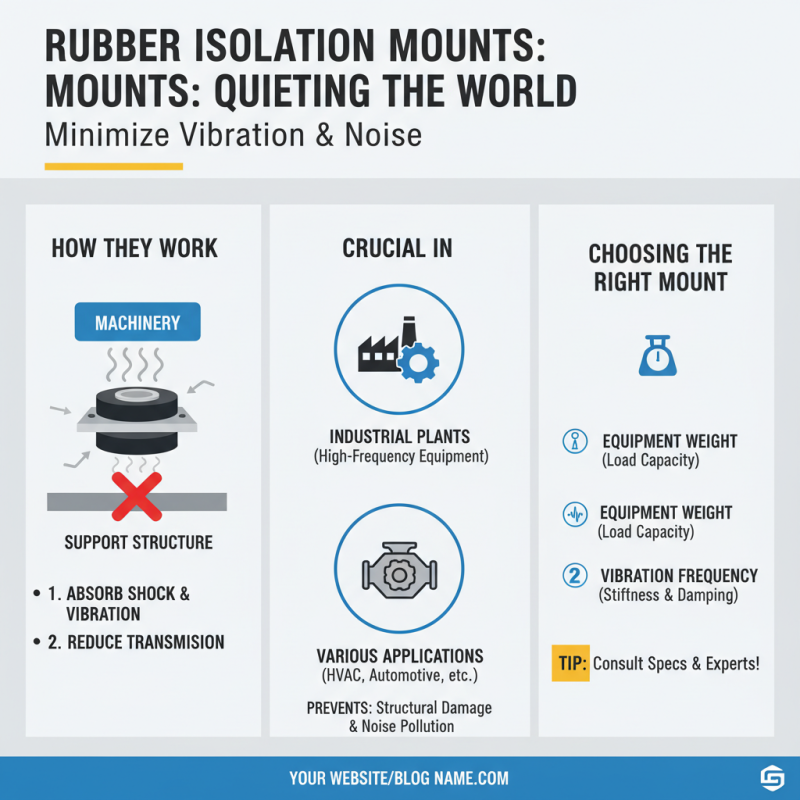
Rubber isolation mounts play a crucial role in minimizing vibrations and noise in various applications. They primarily work by absorbing shocks and reducing the transmission of vibrations from machinery to other surfaces. This functionality is vital in environments like industrial plants, where equipment operates at high frequencies and can cause significant disturbances. When choosing rubber mounts, it's important to consider the weight of the equipment and the specific vibration frequencies involved.
These mounts come in various types, designed for different loads and environments. For instance, some may excel in high-temperature applications while others are tailored for heavy loads. Understanding the material composition is also essential; rubber's properties can significantly affect performance. While choosing the right mount may seem straightforward, many overlook critical details. The wrong choice can lead to inefficiencies and additional wear on machinery.
It's normal to feel overwhelmed by options. Proper research is key to making an informed decision. Consulting with professionals or reviewing case studies can provide deeper insights into selecting the best rubber isolation mount for specific needs. Balancing cost and quality is another challenge. Many find themselves reflecting on their choices after installation, highlighting the importance of careful evaluation before purchase.
Identifying Your Specific Vibration and Shock Absorption Needs
Identifying the specific vibration and shock absorption needs is crucial for selecting the right rubber isolation mounts. Various applications require different resilience properties. For instance, heavy machinery demands mounts that can withstand significant vibrations, as outlined in a report by the Machinery Vibration Evaluation Institute, which states that up to 70% of these machines could experience reduced lifespan without proper isolation.
Consider the frequency of vibrations in your environment. Low-frequency vibrations might require softer mounts, while high-frequency situations could benefit from firmer mounts. The American Institute of Mechanical Engineers reports that improper mount selection can lead to a 30% increase in operational noise levels. This data underlines the importance of understanding your unique needs before making a decision.
Additionally, assess the weight and dynamic load of the equipment. Some may find that they overestimate their requirements, leading to excessive cost. Others may choose inferior mounts that do not provide adequate support. Finding a balance in rubber hardness and product dimensions is essential to achieve reliable performance. Ultimately, a thorough assessment of these factors helps ensure the effectiveness of vibration and shock absorption solutions.
Vibration and Shock Absorption Characteristics of Rubber Isolation Mounts
Evaluating Load Capacity and Weight Considerations for Mounts
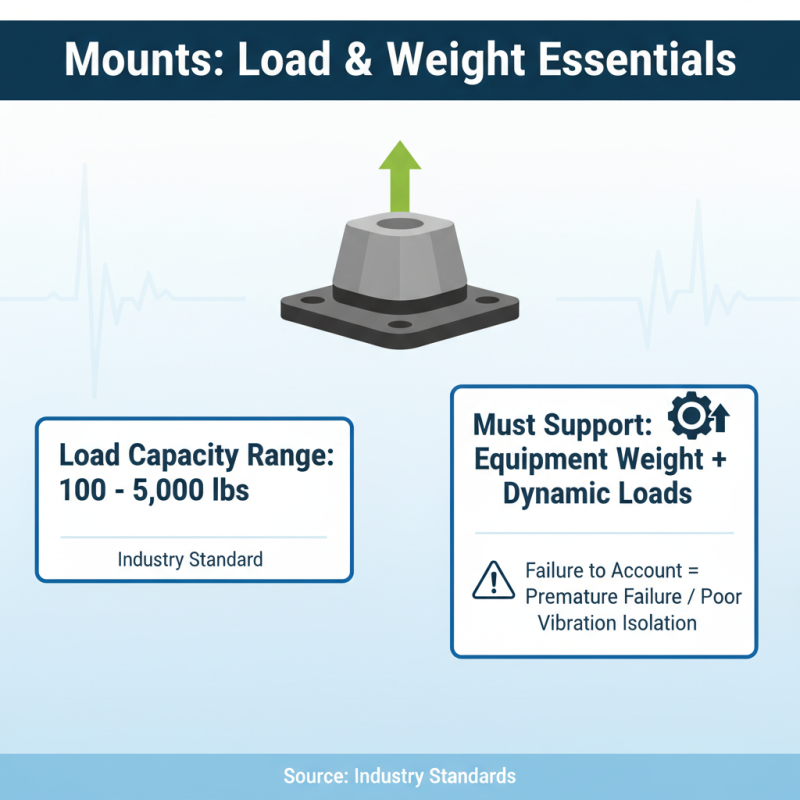
When selecting rubber isolation mounts, load capacity and weight considerations are vital. According to industry standards, the load capacity of rubber mounts ranges between 100 and 5,000 pounds. An appropriate mount must support not just the weight of the equipment but also any dynamic loads. Failing to account for these factors can lead to premature failure or ineffective vibration isolation.
Weight distribution also plays a significant role in mount selection. Uneven weight can cause mounts to wear out faster. For best results, distribute the load evenly across the mounts. Standard practice suggests using load tables to determine the right mounts. These tables provide critical data about potential performance. A mismatched mount can lead to vibrations and noise, affecting equipment lifespan.
Moreover, consider the environment in which the mounts are used. Factors like temperature and exposure to chemicals can alter rubber properties. A study by the American Institute of Plant Engineers indicates that improper selection can reduce a mount’s effectiveness by up to 30%. Adjusting for environmental factors ensures reliability and efficiency, leading to better performance and lower maintenance costs.
Selecting the Appropriate Mount Shape and Size for Your Application
Choosing the right rubber isolation mounts requires attention to their shape and size. Different applications demand specific characteristics. For instance, those in heavy machinery might need larger, sturdier mounts with a wider footprint. Smaller mounts work well for delicate equipment. The shape affects how well the mount can absorb vibrations.
Consider the operating environment too. For high-temperature settings, a resilient shape is essential. If it's exposed to chemicals, the mount’s material must resist degradation. A common mistake is selecting a mount based solely on guesswork. Engineers should analyze the load and the frequencies involved. This approach helps in picking accurately.
Testing different shapes and sizes is crucial. Sometimes, what looks ideal on paper may not perform effectively. It is wise to consult with experts but also perform hands-on trials. Documenting each step allows for reflection on choices made. These insights pave the way for improved decisions in future projects. Adapting and learning through experience guarantees better results.
Assessing Environmental Factors Affecting Rubber Isolators' Performance
When selecting rubber isolation mounts, understanding environmental factors is crucial.
Temperature fluctuations can significantly impact their performance. Research indicates that rubber can lose its elasticity in extreme heat or cold.
In high-temperature conditions, rubber may harden, losing its damping properties. Conversely, cold temperatures can make rubber rigid, reducing its ability to absorb vibrations effectively.
Moisture exposure is another critical factor. Rubber can degrade when exposed to water or chemicals.
A study showed that submerged rubber isolators lost 30% of their efficiency over time. It is essential to assess the surrounding environment before installation. Heavy-duty applications require mounts that can withstand harsh conditions without failure.
Additionally, consider frequency and vibration levels. Different isolators perform best at specific frequencies.
Misalignment in frequency ranges can lead to ineffective isolation. One report noted that improper mount selection led to increased equipment wear, raising maintenance costs by nearly 40%.
These insights highlight the importance of a thorough evaluation. Factors like temperature, moisture, and vibration frequency must not be overlooked.