Top 10 Liquid Rubber Uses for Global Buyers to Consider?
In the dynamic world of construction and manufacturing, "Liquid Rubber" stands out as a versatile solution. Experts like Dr. Emily Greene, a leading authority in polymer technology, emphasize its importance: "Liquid Rubber offers unmatched flexibility and resilience in various applications." This adaptability makes it a go-to material for many industries.
From waterproofing to protective coatings, Liquid Rubber has become integral. Its unique properties allow it to form seamless membranes, providing long-lasting protection for roofs and surfaces. Additionally, manufacturers appreciate its efficiency, reducing labor costs and time.
However, despite its benefits, some companies question its long-term performance. The market is evolving, and innovations emerge. Buyers must stay informed about the latest advancements. Exploring the top applications for Liquid Rubber reveals its broad potential while highlighting the need for careful consideration in material selection.

Top 10 Applications of Liquid Rubber in Construction and Renovation
Liquid rubber has become a popular choice in construction and renovation for its versatility and durability. One prominent application is in waterproofing. It creates a seamless barrier against water intrusion, making it ideal for roofs and basements. This prevents leaks and protects structural integrity. In addition, liquid rubber is flexible, allowing it to expand and contract with temperature changes, which is crucial for long-lasting performance.
Another valuable use is as a protective coating. Liquid rubber can be applied to various surfaces to enhance durability. It offers resistance to chemicals, UV rays, and abrasion. This is essential for surfaces like walkways and decks, which face high traffic and wear. Furthermore, its easy application process saves time and labor costs, making it attractive for contractors.
However, there are challenges to consider. Proper preparation of surfaces is vital for adhesion. Inadequate cleaning can lead to peeling or damage over time. As with any material, testing the compatibility with existing structures is necessary. Taking these steps ensures the effectiveness of liquid rubber in your projects.
Innovative Uses of Liquid Rubber in Automotive and Transportation Industries
Liquid rubber has become an innovative solution in the automotive and transportation industries. It offers remarkable flexibility and durability under various conditions. Many manufacturers are exploring its applications for coatings and sealants. The ability to withstand harsh weather and chemicals makes it invaluable.
One significant use is in sound deadening. Liquid rubber can be applied to various parts of vehicles to reduce noise. This enhances the driving experience and adds comfort. Another application is in waterproofing vehicle components. By forming a seamless barrier, it prevents moisture damage and extends the lifespan of critical parts.
Tips: Choose high-quality liquid rubber for optimal results. Conduct a small test before applying it to larger areas. Ensure the surface is clean and dry for proper adhesion. Furthermore, allow adequate curing time before use to achieve the best performance. Remember to regularly check for any wear or damage over time. This proactive approach can save costs in the long run.
Liquid Rubber Solutions for Industrial Machinery and Equipment Protection
Liquid rubber applications have gained traction in industrial settings, particularly for machinery and equipment protection. This versatile material provides excellent resistance to harsh chemicals and extreme temperatures. According to a report by MarketsandMarkets, the liquid rubber market is projected to reach $11.2 billion by 2026, indicating a strong demand for effective industrial solutions.
One major advantage of liquid rubber is its seamless application. It forms a protective layer that adheres well to various materials, including metal and concrete. This can significantly reduce maintenance costs, as reported by the National Association of Corrosion Engineers. Many industrial operators have noted that using liquid rubber coatings can extend equipment lifespan by 40% or more. However, some may underestimate the importance of proper surface preparation before application.
While liquid rubber is an effective choice, some challenges remain. The curing time can vary based on environmental conditions, making planning essential. Additionally, not all formulations are created equal; some may not offer the requisite durability for specific applications. It is crucial for users to evaluate the right type of liquid rubber for their unique needs, as this plays a critical role in achieving optimal protection.
Top 10 Liquid Rubber Uses for Industrial Machinery and Equipment Protection
Environmental Benefits of Liquid Rubber in Waterproofing and Coatings
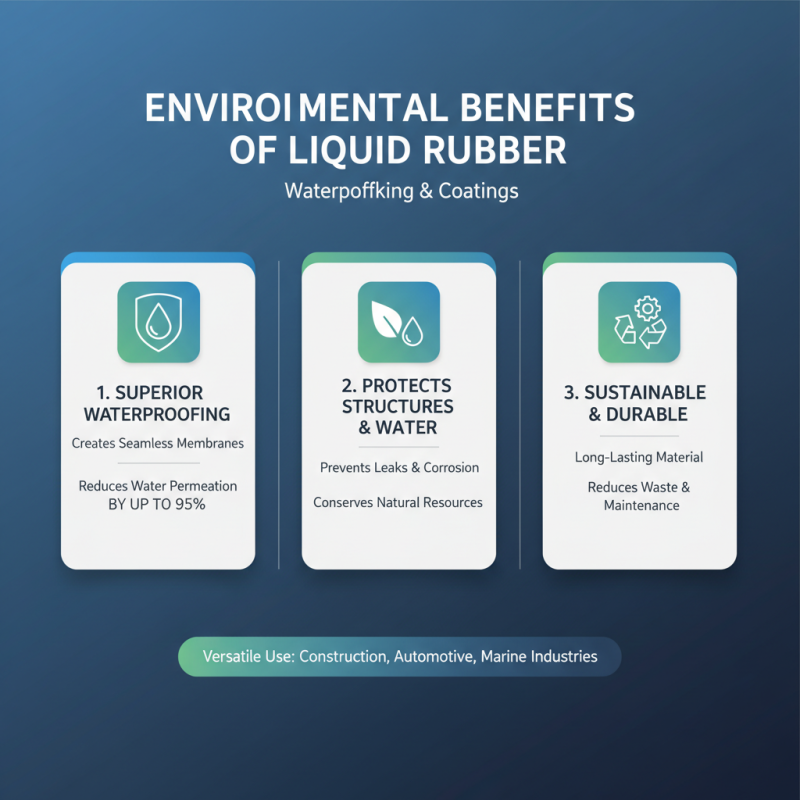
Liquid rubber is gaining attention due to its environmental benefits, particularly in waterproofing and coatings. This flexible material is commonly used in construction, automotive, and marine industries. Its notable feature is its ability to create seamless membranes, which are essential for effective waterproofing. Research indicates that liquid rubber can reduce water permeation significantly, by as much as 95%. This efficiency not only protects structures but also aids in maintaining natural water resources.
The application of liquid rubber in coatings offers a sustainable alternative to traditional chemical-laden products. For instance, it is highly resistant to UV radiation and harsh weather conditions, which prolongs the lifespan of surfaces without frequent reapplications. A study from the International Journal of Environmental Research and Public Health highlights that using liquid rubber can lower the amount of volatile organic compounds (VOCs) released into the atmosphere. Reducing VOCs is crucial for improving air quality and promoting healthier living conditions.
However, challenges remain. The initial costs may deter some buyers, although the long-term savings can outweigh this concern. Moreover, proper application techniques are vital. Without adequate experience, users can face issues like uneven surfaces or premature wear. These reflections emphasize the importance of skilled application and thorough understanding before adoption.
Liquid Rubber for Creative Art and Crafting Projects: A Guide for Hobbyists
Liquid rubber has gained popularity in the world of arts and crafts. Its versatility makes it an excellent choice for hobbyists wanting to create unique projects. You can use liquid rubber to make molds, casts, or even sculptures. The texture allows for fine detail, capturing intricate designs beautifully.
When starting a project, consider experimenting with different colors. Mixing in pigments can yield stunning visual effects. Ensure you work in a well-ventilated area. The fumes can be overwhelming. Use gloves and protect your work surface. Be careful; liquid rubber can be messy during application.
One challenge is finding the right curing time. Depending on thickness, it may take longer than expected to set completely. Patience is key. Some areas might need extra attention to avoid bubbles. Practice on smaller objects first. This helps build confidence before tackling larger endeavors.
Enjoy the process, and don't rush your creativity. Embrace the imperfections; they often lead to unexpected beauty.