Top 10 Rubber Isolators for Global Buyers in 2026?
In the fast-evolving world of manufacturing, Rubber Isolators stand out for their essential role in vibration control. As industries grow, the demand for effective isolators rises. In 2026, buyers face numerous options, each with unique advantages.
Choosing the right Rubber Isolators can be challenging. It requires a deep understanding of materials and applications. Buyers should consider factors like durability, load capacity, and environmental resistance. Even minor oversights in selection may lead to costly production disruptions.
Moreover, manufacturers continuously innovate, presenting both new opportunities and potential pitfalls. Staying informed is key. Understanding trends can empower buyers to make better choices. While there's a wealth of information available, not all of it is reliable. Therefore, having access to credible resources is crucial in navigating this complex landscape effectively.
Overview of Rubber Isolators and Their Applications in Various Industries
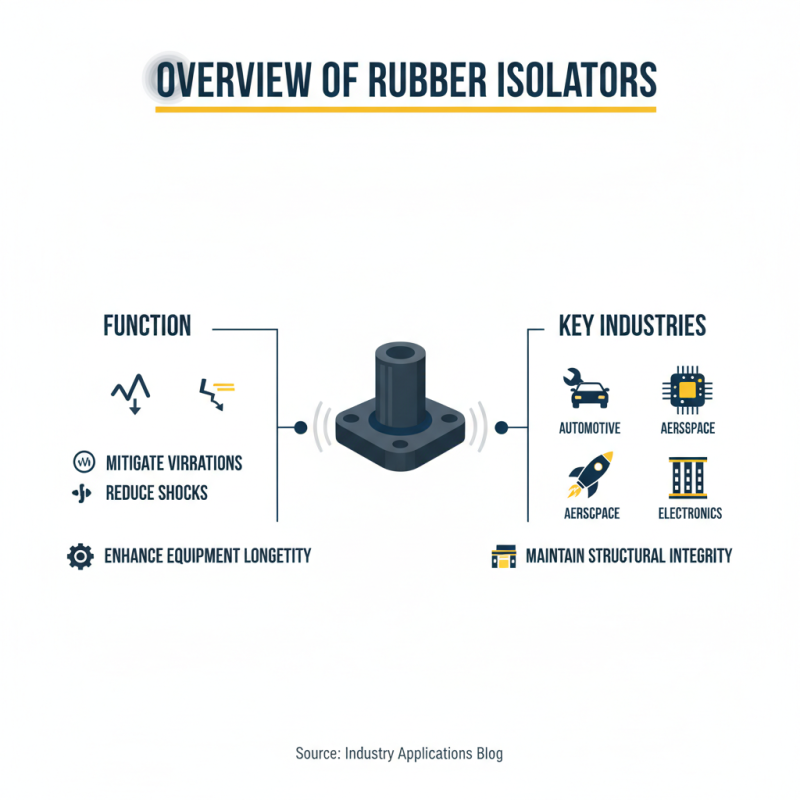
Rubber isolators play a crucial role in multiple industries. They are widely used in the automotive, aerospace, and electronics sectors. These isolators mitigate vibrations and shocks. They help maintain structural integrity, enhancing equipment longevity.
In the automotive field, rubber isolators dampen engine vibrations. This improves passenger comfort and safety. In aerospace, they are vital for protecting sensitive instruments. In electronics, they prevent damage to delicate components. Different compositions of rubber offer various performance characteristics. Some are more resilient, while others excel in vibration damping.
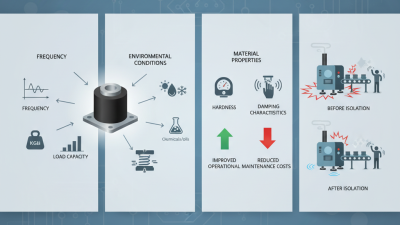
While rubber isolators are effective, not every application is its best fit. Choosing the right isolator requires careful evaluation. Factors like load capacity and environmental conditions must be considered. Testing different materials can lead to better outcomes. Feedback from engineers is essential for refining designs.
Key Factors to Consider When Selecting Rubber Isolators for Your Needs
When choosing rubber isolators, several key factors demand attention. First, understand the application requirements. Different environments may require specific properties such as temperature resistance and load capacity. According to a report by MarketsandMarkets, the rubber isolator market is projected to grow by 3.8% annually, driven by increased demand in automotive and aerospace sectors. This suggests a shift toward heavier-duty specifications.
Material composition is also crucial. Various rubber compounds provide different levels of vibration damping, insulation, and durability. Selecting the wrong type can lead to insufficient performance or premature wear. For instance, a study by IBISWorld highlights that improperly chosen isolators can shorten the lifespan of machinery by 20%.
Consider the isolator's design and mounting capabilities. Their geometric shape can affect performance significantly. Poor design can result in suboptimal isolation, with excessive vibrations transmitted to sensitive equipment. Real-world data indicate that even minor design flaws can lead to 15% more noise in industrial settings. Buyer awareness is essential, as the need for precision in selecting rubber isolators continues to grow alongside advancing technology and application needs.
Top 10 Rubber Isolators for Global Buyers in 2026
The chart below illustrates the key performance factors of the top 10 rubber isolators based on factors such as damping ratio, temperature resistance, load capacity, and frequency range. This data is essential for global buyers looking to make informed decisions.
Top 10 Rubber Isolators for Global Buyers: Features and Specifications
Rubber isolators are essential for reducing vibrations in various industries. The right choice of rubber isolators can enhance equipment lifespan. According to a recent market analysis, the global rubber isolator market is projected to reach USD 1.8 billion by 2026. This growth is driven by increased demand in construction and manufacturing sectors.
When evaluating rubber isolators, consider their tensile strength, hardness, and temperature resistance. High-quality isolators often feature a durometer rating of 40 to 70 Shore A. This is ideal for most industrial applications. It's also crucial to assess the isolator's load-bearing capacity, which should align with the specific needs of your project. A common misconception is that thicker isolators always provide better performance. However, this is not necessarily true.
Another aspect is environmental resistance. Isolators exposed to chemicals or extreme temperatures may degrade faster. Improper material selection can lead to costly failures. Regular performance evaluations and adjustments can ensure optimal function. The importance of reliable sourcing cannot be overstated. Understanding the technical specifications is key to making informed decisions.
Top 10 Rubber Isolators for Global Buyers in 2026
| Isolator Type |
Load Capacity (kN) |
Frequency Range (Hz) |
Material Hardness (Shore A) |
Temperature Resistance (°C) |
Typical Applications |
| Standard Rubber Isolator |
15 |
5 - 50 |
60 |
-20 to 80 |
Machinery, HVAC |
| High Load Isolator |
25 |
5 - 40 |
75 |
-10 to 90 |
Industrial Equipment |
| Vibration Isolator |
10 |
10 - 100 |
55 |
0 to 70 |
Electronics, Precision Instruments |
| Low Frequency Isolator |
12 |
1 - 25 |
65 |
-30 to 80 |
Automotive, Aerospace |
| Custom Rubber Isolator |
20 |
5 - 60 |
70 |
-20 to 100 |
Custom Applications |
| Heavy Duty Isolator |
30 |
5 - 50 |
80 |
-10 to 90 |
Construction, Mining |
| Oil Resistant Isolator |
18 |
10 - 45 |
70 |
-20 to 120 |
Petrochemical, Machinery |
| Advanced Acoustic Isolator |
14 |
15 - 80 |
60 |
-30 to 75 |
Acoustic Control, Music Equipment |
| Seismic Isolation Pad |
22 |
1 - 30 |
75 |
-20 to 85 |
Structural Engineering |
| Spring Mounted Rubber Isolator |
16 |
10 - 50 |
65 |
-20 to 90 |
HVAC Systems, Generators |
Market Trends and Innovations in Rubber Isolators for 2026
In 2026, the rubber isolator market will experience dynamic shifts driven by technological advancements. Innovations such as improved manufacturing techniques are making rubber isolators more efficient and durable. For example, the integration of advanced elastomer materials increases vibration absorption. This leads to enhanced performance across various industries, such as automotive, aerospace, and industrial machinery.
Eco-friendly production methods are gaining traction. Many manufacturers are exploring sustainable materials to meet growing environmental concerns. This transition is not without its challenges. Finding the right balance between durability and eco-friendliness requires dedicated research. However, the shift will likely positively impact market growth and consumer acceptance, especially among environmentally conscious buyers.
Additionally, customization is becoming increasingly important. Buyers seek tailored isolator solutions that fit specific application needs. This demand prompts manufacturers to innovate continuously. Offering bespoke designs can enhance competitiveness. As trends develop, the rubber isolator market is poised for significant transformation in product offerings and consumer preferences by 2026.
Comparison of Leading Manufacturers and Suppliers in the Rubber Isolator Market
The rubber isolator market is growing rapidly. According to industry reports, the global market is projected to reach $1.5 billion by 2026. This growth is driven by increasing demand in sectors like automotive, aerospace, and construction. Key players are focusing on innovation and sustainable materials to cater to evolving market needs.
Leading manufacturers are adopting advanced technologies. These include automation in production processes for higher efficiency. However, the industry faces challenges like fluctuating raw material costs and competition from low-cost alternatives. Furthermore, the standardization of products remains a concern. Companies must balance customization and compliance with global standards.
Market analysis indicates a significant focus on quality and reliability. Buyers are increasingly looking for suppliers who can offer detailed performance data and testing certifications. This shift towards data-driven purchasing decisions highlights the need for transparency in manufacturing processes. Continuous improvement and customer feedback are essential for manufacturers to thrive in this competitive landscape.