Get a custom solution for free

2026 Best Rubber Suction Cup Types for Global Buyers

Choosing the right Rubber Suction Cup starts with the job it must do. A cup lifting a smooth glass panel faces different demands from one holding a textured automotive trim piece. Surface finish, load direction, temperature, and exposure to oil or moisture all affect grip. A size that looks generous may still fail if the sealing lip cannot sit flat.

Global buyers also need to compare material and design, not just price. Silicone, natural rubber, and nitrile each suit different working conditions, while flat, bellows, and oval cups handle contact and movement differently. Check the supplier’s stated operating range, dimensions, hardness, and test method. Ask how performance was measured. Results from a clean laboratory surface may not match a dusty production line.

Small details matter. A slightly warped cup, a stiff hose connection, or a rough edge can interrupt a cycle. Trial samples help reveal these issues, though one test cannot represent every surface or climate. This guide reviews common types and practical selection points. Some choices remain imperfect; the best fit depends on real operating conditions.
2026 Best Rubber Suction Cup Types for Global Buyers

Understanding Rubber Suction Cups and Their Core Functions

Rubber suction cups hold smooth materials by creating a pressure difference. Pressed against glass, a cup’s flexible lip seals around the surface; air is then removed, and surrounding atmospheric pressure helps keep the load in place. The cup does not “stick” through suction alone. Surface texture, dust, moisture, temperature, and rubber condition can all weaken the seal. Small details matter.

Cup shape and rubber compound affect how a gripper handles an object. Flat cups suit rigid, smooth sheets, while bellows cups can accommodate modest height differences and uneven contact. A soft lip may seal well on delicate packaging, but it can deform under heavier loads. The International Federation of Robotics reported 541,302 industrial robots installed worldwide in 2023, in its World Robotics 2024 report. That figure reflects wider automation demand, not suction-cup sales; still, it helps explain why dependable part handling matters. In practice, buyers should test cups on the actual material and check holding performance under realistic conditions. A clean test piece is useful, but it may hide problems found on a dusty production line. That’s easy to overlook.
Comparing Flat, Bellows, Oval, and Specialty Cup Designs

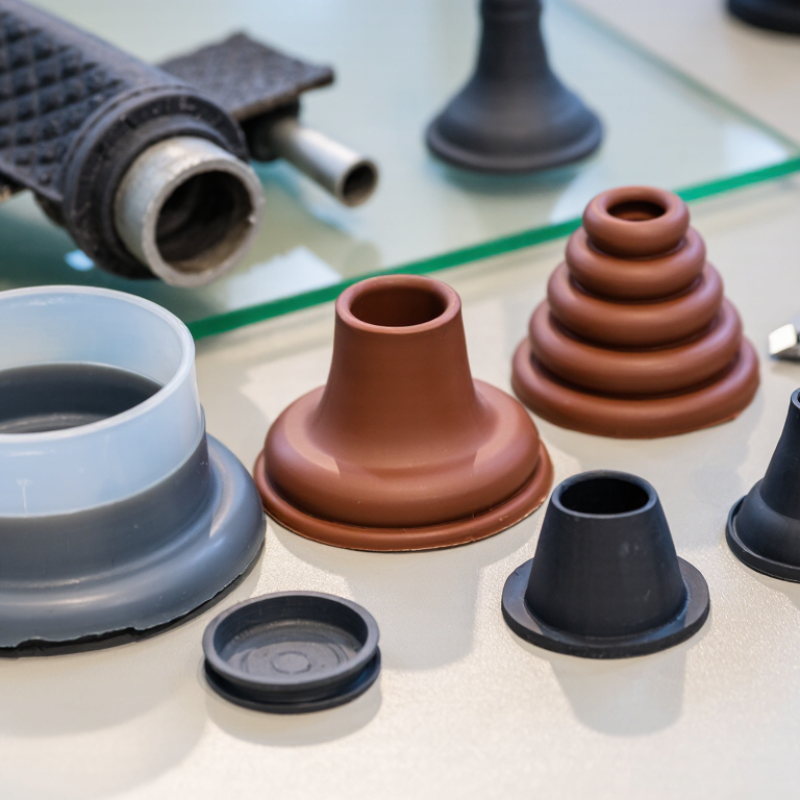
Flat suction cups are a practical choice for smooth, level surfaces such as glass, polished metal, and plastic sheets. Their wide contact area can provide a steady grip when the load is light and evenly distributed. Bellows cups have flexible folds that help them adapt to uneven surfaces or small height differences. They also offer extra lift, but that added movement may be less suitable for precise placement at speed.

Oval cups fit narrow objects, including pipes, trim, and elongated panels. Their shape can reduce overhang where a round cup would not fit. Specialty designs address particular handling needs, such as porous materials, curved parts, or delicate surfaces. The right choice depends on surface texture, part weight, acceleration, and available space. A cup that holds a sample by hand may still slip during repeated machine cycles. Small details matter.

Tips: Check the surface for dust, oil, and seams before testing. Compare grip under the actual load and motion, not just at rest. Inspect the lip for wear; even a small tear can cause leakage. I have seen selection decisions focus too much on cup shape. That is easy to do, and worth reconsidering.

2026 Best Rubber Suction Cup Types for Global Buyers

Comparing flat, bellows, oval, and specialty cup designs by typical application suitability.

Ratings are qualitative design comparisons on a 1–5 scale, not standardized test measurements. Actual performance depends on cup material, dimensions, vacuum level, surface condition, and load.

Selecting Rubber Compounds for Different Materials and Conditions

Choosing the right rubber compound is more important than choosing suction cup shape. The contact material, temperature, load, and surface texture all affect holding performance.

Silicone rubber suits glass, polished metal, and clean plastic surfaces. It remains flexible across wide temperature changes and leaves minimal marks. However, silicone can tear when exposed to sharp edges or repeated scraping. Nitrile rubber performs well around oils, workshop fluids, and many smooth metal parts. It usually offers stronger abrasion resistance, but cold conditions may reduce its flexibility.

EPDM is a practical choice for outdoor use. It handles sunlight, rain, and ozone better than many general-purpose rubbers. It is not suitable for petroleum-based oils. Natural rubber can provide excellent grip on dry, slightly textured materials. Its aging resistance is weaker, especially under heat and direct sunlight. Fluorocarbon compounds support demanding chemical and high-temperature environments, although they often cost more and feel less compliant.

Test the actual surface.

A clean glass panel may hold securely in a warehouse but fail after dust settles on it. Surface energy, microscopic scratches, and moisture also change the seal. Buyers should request compound data, hardness values, temperature ranges, and sample testing before placing large orders. A neat specification sheet can still mislead. Real conditions are rarely neat. Use a safety margin, and review the design after repeated loading rather than trusting the first successful test.

Matching Cup Size and Shape to Load and Application Needs

Choosing the right rubber suction cup starts with load geometry, not catalog habit. A round cup suits smooth, centered loads. An oval cup often grips narrow glass strips or metal panels better. Bellows cups tolerate uneven surfaces and small height differences, but they may flex under side loads.

Atmospheric pressure is about 101.3 kPa at sea level, according to NIST reference data. A 50 mm cup has roughly 0.00196 square meters of effective area. At a 60 kPa vacuum differential, its theoretical holding force is about 118 newtons. Real performance is lower. Dust, surface texture, rubber aging, and leakage reduce usable force. For that reason, engineers should apply a tested safety margin, rather than trusting the theoretical figure.

Cup diameter should increase with load weight and movement risk. Larger cups spread force across fragile sheets, while smaller cups fit tight contact zones. Soft rubber can seal textured surfaces, but it may deform around sharp edges. Firmer rubber supports better stability on smooth panels. ASME B30.20 guidance for below-the-hook lifting devices also emphasizes rated capacity, inspection, and controlled use. This matters during lifting and tilting. A cup rated for vertical holding may behave poorly during peeling or sideways motion. Selection charts can look precise. Field trials still matter. A small leak can change everything.

Evaluating Quality, Certifications, and Suppliers for Global Buyers in 2026

For global buyers in 2026, rubber suction cup selection should begin with the application, not the catalogue image. Silicone suits wider temperature ranges, while natural rubber often provides strong initial grip and practical cost control. Thermoplastic rubber can simplify colour matching and high-volume production. The right choice depends on load, surface texture, humidity, and repeated use.

Quality must be checked through measurable evidence. Request hardness data, tensile strength, compression set results, and ageing tests from each supplier. A cup that holds well on clean glass may fail on dusty panels or textured metal. Small details matter. Inspect rim thickness, mould seams, odour, and deformation after storage. Certifications should match the destination market and intended use, such as material declarations, quality-system certificates, or relevant safety testing. A certificate alone does not prove every production batch is consistent.

Supplier evaluation needs practical verification. Ask for batch traceability, inspection records, corrective-action procedures, and samples from current production. Test samples under realistic conditions, including temperature changes and sideways loads. Factory videos can help, but an independent audit provides stronger evidence. I have seen attractive samples hide uneven edges and weak vacuum retention. That risk is easy to underestimate. Buyers should also clarify minimum order quantities, tooling ownership, lead times, packaging protection, and replacement policies before signing. Even a careful evaluation may miss a variable, so performance testing should continue after delivery.