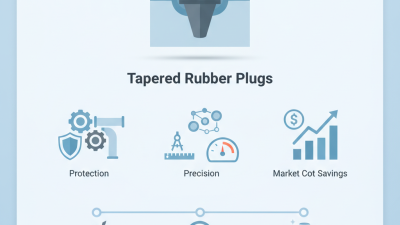
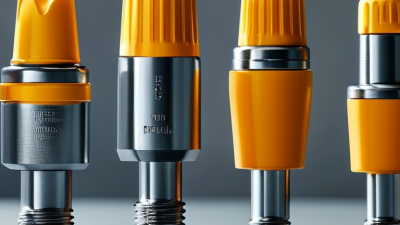
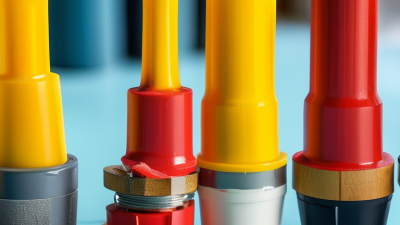
Choosing the right Tapered Rubber Plugs can prevent leaks, contamination, and costly production delays. In industrial settings, these small components often protect open ports, tubes, tanks, and machined holes. Their value becomes clear when equipment faces vibration, pressure changes, dust, oil, or repeated cleaning.
This guide examines seven strong options for industrial applications. Each choice is considered through material quality, dimensional accuracy, temperature resistance, chemical compatibility, and removal effort. Silicone plugs may suit high-temperature processes, while EPDM can perform well around water and weather exposure. Nitrile options may be more practical where oils are present. However, material names alone are not enough. Supplier data, batch consistency, and actual operating conditions matter more than attractive product descriptions.
Field experience also shows a common weakness. A plug that fits perfectly in a clean workshop may loosen after heat cycling or chemical exposure. That detail is easy to miss. Reliable selection requires checking the smallest and largest opening diameters, wall thickness, hardness, and expected compression. It also helps to confirm whether the plug is intended for temporary masking, transport protection, or long-term sealing.
The seven products discussed here are not ranked by appearance or price alone. Their performance depends on the application. Readers should review technical specifications and request test evidence when conditions are demanding. A careful choice may cost slightly more upfront. It can still reduce replacement work, downtime, and unexpected seal failure.
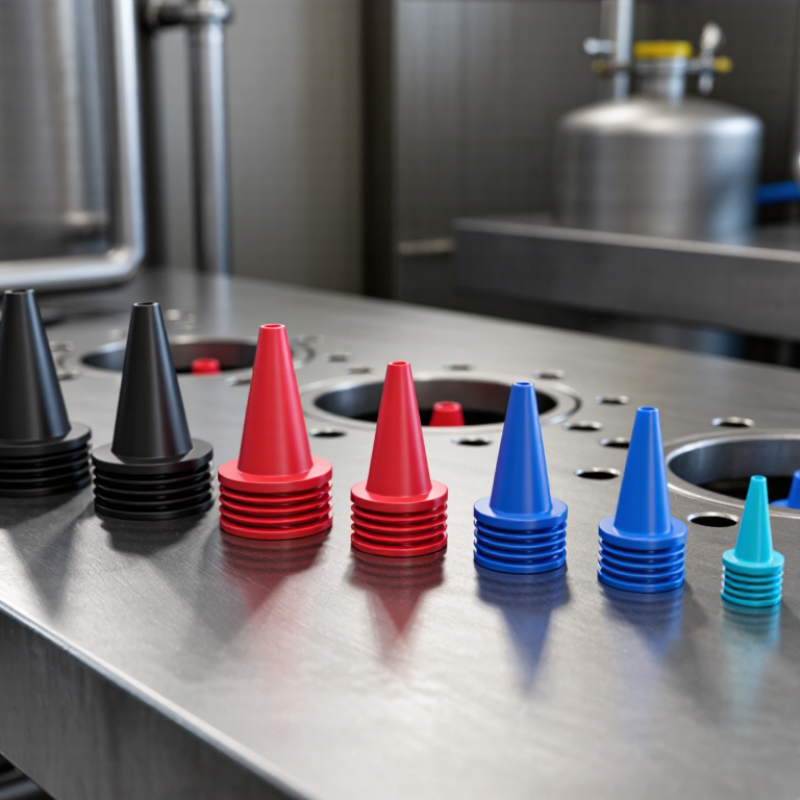
A tapered rubber plug is an elastomeric closure with a wider head and a narrower tip. It seals a drilled opening, pipe end, tank port, or inspection hole through controlled interference. As technicians press the plug inward, its tapered wall compresses against the opening. Friction holds it in place, while rubber recovery maintains contact when equipment vibrates.
Material selection matters. Nitrile suits many petroleum-based fluids, while EPDM generally performs better with water, steam, and weather exposure. Silicone handles broad temperature changes but may resist tearing less effectively. ASTM D2000 helps engineers compare elastomer performance by hardness, heat resistance, and fluid compatibility. Field experience still matters. A perfect datasheet cannot predict every contaminated surface.
Demand supports careful specification. Grand View Research’s Industrial Rubber Market Size, Share & Trends Analysis Report projects roughly 4.7% annual growth between 2024 and 2030. That growth reflects wider use of flexible sealing components in manufacturing and process equipment. The U.S. Department of Energy also reports that compressed-air leaks can waste significant plant energy, often exceeding 20% in poorly maintained systems. A loose temporary plug can contribute to that loss.
Measure the opening before installation. Check temperature, pressure, chemical exposure, and removal access. A plug that fits too easily may leak. One forced too deeply may split or become difficult to remove. I have seen both failures. The overlooked detail is surface condition. Oil, burrs, and rough edges can defeat a sound design. (Sources: Grand View Research, 2024; U.S. Department of Energy, Industrial Assessment guidance.)
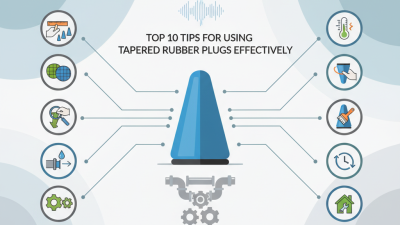
Tapered rubber plugs are simple components, but their performance depends heavily on material selection. Nitrile rubber suits petroleum oils, hydraulic fluids, and moderate temperatures. EPDM performs better with hot water, steam, and outdoor exposure. Silicone remains flexible across wide temperature changes, although it may tear under sharp mechanical loading. Neoprene offers balanced resistance to weather, ozone, and mild chemicals. Fluorocarbon rubber handles aggressive fuels and solvents, but its higher cost requires careful justification.
Performance involves more than chemical compatibility. Shore hardness affects insertion force and sealing pressure. A soft plug can conform to an uneven opening, while a harder plug may resist extrusion. Compression set is critical when a plug remains installed for months. Lower compression set usually means better recovery after pressure or heat exposure. Temperature ratings should include real operating cycles, not only peak values. Check the plug against the hole diameter, wall thickness, and expected vibration.
Field inspections often find loose plugs caused by poor dimensional matching. It is an easy mistake. A laboratory chart cannot predict every installation condition. Surface roughness, oil swelling, and repeated removal can change results. For the seven best tapered designs, verify material traceability, measured hardness, dimensional consistency, and batch inspection records. A reliable supplier should provide test data, but engineers still need to review the actual process.
Choosing among the seven best tapered rubber plugs starts with the opening, not the catalog photograph. Measure the port’s minor diameter, major diameter, depth, and sealing land with clean calipers. Measure twice. A plug that is too small may leak under vibration, while excessive interference can damage thin metal walls. The U.S. Department of Energy’s Improving Compressed Air System Performance sourcebook reports that leaks can waste 20–30% of compressor output in poorly maintained systems. Correct sizing therefore affects operating cost, not only fit. For threaded or irregular openings, confirm whether the plug seals on its taper, shoulder, or both.
Shape should match installation conditions. A long taper suits deep bores, but a short taper is safer where removal space is limited. Flanged plugs resist over-insertion and provide a visible stop. Select hardness using temperature, pressure, and handling demands. Shore A 70 is a practical starting point for many industrial sealing tasks, but softer rubber may conform better to rough surfaces. Harder compounds usually resist extrusion more effectively. ASTM D2240 defines the Shore hardness test, yet hardness values alone do not predict chemical compatibility or aging. ISO 3302-1 also shows why dimensional tolerance matters; small molded-part deviations can change interference significantly. I have seen apparently correct plugs fail because technicians measured the damaged opening, not the original bore. That detail is easy to miss. Review media exposure, compression, and removal frequency before approving the final size.
Typical Shore A hardness ranges help match a tapered plug to sealing force, flexibility, wear, and chemical exposure. Softer compounds conform better to irregular openings, while harder compounds provide greater mechanical stability and abrasion resistance.
For sizing, measure the smallest and largest opening diameters, then select a plug whose taper spans both dimensions without excessive insertion force. Confirm the temperature and chemical-resistance requirements before final selection.
Tapered rubber plugs solve different problems across tanks, pipes, panels, and test fixtures. Grand View Research’s 2024 industrial rubber analysis estimates the market exceeded USD 40 billion in 2023, with continued growth through 2030. That growth reflects rising demand for dependable sealing components.
Seven practical options cover most industrial needs. EPDM plugs suit outdoor water systems, steam, and weather exposure. Nitrile rubber plugs resist petroleum oils and hydraulic fluids. Silicone plugs tolerate wide temperature swings and support clean processing environments. Fluoroelastomer plugs handle aggressive chemicals and elevated heat. Neoprene plugs provide balanced resistance to ozone, oils, and weathering. Natural rubber offers strong elasticity for low-cost, repeated fitting. Polyurethane plugs deliver high abrasion resistance in demanding fixtures. No material wins every test.
Choose the taper carefully. A shallow taper supports easier removal, while a steeper profile improves grip under vibration. ASTM D2000 classification helps compare elastomer performance, but it does not replace application testing. The U.S. Department of Energy reports that compressed-air leaks can waste 20–30% of compressor output, making fit and inspection important. Measure the opening, temperature, pressure, fluid exposure, and required hardness. A harder plug is not automatically safer. In practice, surface damage, poor storage, and excessive insertion force can defeat a well-selected compound. My cautious preference is to test a small batch before specifying large quantities.
Choosing among the seven best tapered rubber plugs starts with fit, material, and working conditions. A plug should compress evenly inside the opening, not force the wall outward. Measure the hole at several points. Worn or irregular bores can mislead even experienced technicians. For oils, solvents, heat, or outdoor exposure, confirm chemical and temperature resistance from the technical data sheet. Nitrile, silicone, EPDM, and fluorocarbon compounds behave differently. No single compound suits every plant. That assumption causes failures.
During installation, clean the bore and remove sharp edges, burrs, and loose scale. Apply only a compatible lubricant when the procedure allows it. Push the plug straight, using steady hand pressure or a suitable tool. Never strike soft rubber with a metal hammer. A plug seated too deeply may become difficult to remove. A plug left proud may catch equipment or leak. Inspect gloves, eye protection, and lockout controls before work begins. After installation, check for twisting, cuts, extrusion, or visible gaps. Record size, compound, date, and service conditions.
Tips: Keep spare plugs sealed, cool, and away from sunlight. Inspect stored parts before use. Replace any plug that hardens, swells, cracks, or loses elasticity. Planned replacement is often safer than waiting for a leak. Still, field judgment matters. Review the specification after any unexpected failure, because the original choice may have been only partly correct.
| Rank | Recommended Plug Type | Typical Material | Typical Size Range | Approx. Temperature Range | Best Industrial Application | Key Selection Advantage | Installation Considerations | Safety Considerations | Maintenance and Replacement |
|---|---|---|---|---|---|---|---|---|---|
| 1 | General-Purpose NBR Tapered Plug | Nitrile rubber (NBR) | Approx. 6–100 mm opening diameter | About −30°C to +100°C | Hydraulic lines, fuel-related service, machining ports, and general fluid containment | Good resistance to petroleum oils and practical cost-to-performance balance | Clean the bore, lightly lubricate with a compatible lubricant, and press in evenly without twisting excessively. | Confirm pressure and temperature limits; do not use as the sole restraint for pressurized systems unless specifically rated. | Inspect for swelling, cracking, or permanent deformation. Replace when the plug loses elasticity or no longer seals uniformly. |
| 2 | EPDM Chemical-Service Tapered Plug | Ethylene propylene diene rubber (EPDM) | Approx. 8–120 mm opening diameter | About −45°C to +135°C | Water treatment, cooling-water circuits, mild acids, alkalis, and outdoor process equipment | Strong weathering, ozone, hot-water, and steam resistance | Verify chemical compatibility before installation; seat the plug below the sealing lip without cutting or scraping the surface. | Do not use with petroleum oils, mineral-oil greases, or hydrocarbon fuels because swelling may occur. | Rinse after exposure to process chemicals and check for surface hardening, blisters, or loss of interference. Replace after chemical attack. |
| 3 | High-Temperature Silicone Tapered Plug | Silicone rubber | Approx. 5–90 mm opening diameter | About −60°C to +200°C; confirm the exact compound rating | Ovens, heat-treatment fixtures, laboratory equipment, and high-temperature masking | Maintains flexibility across a wide temperature range and releases cleanly from many surfaces | Install only after the part has cooled to a safe handling temperature; use a smooth, rounded tool if removal assistance is needed. | Avoid sharp tools and excessive compression. Silicone has limited resistance to many fuels, oils, and concentrated solvents. | Inspect for tears, compression set, carbonization, or contamination. Replace if the plug becomes brittle, tacky, or permanently flattened. |
| 4 | FKM Solvent- and Fuel-Resistant Plug | Fluoroelastomer (FKM) | Approx. 5–100 mm opening diameter | About −20°C to +200°C | Fuel systems, solvent handling, chemical processing, and aerospace-style fluid service | Excellent resistance to many hydrocarbons, oils, and aggressive fluids at elevated temperatures | Check the specific chemical compatibility and use a compatible lubricant; avoid over-insertion that can make removal difficult. | Use chemical-resistant gloves and eye protection where residual fluids may be hazardous. Relieve pressure before removal. | Inspect after exposure to steam, amines, or hot chemicals. Replace for cracking, swelling, surface embrittlement, or dimensional loss. |
| 5 | Soft Natural-Rubber Grip Plug | Natural rubber | Approx. 4–75 mm opening diameter | About −40°C to +70°C | Temporary dust protection, low-pressure ports, packaging, and non-aggressive fluid service | High elasticity and strong friction grip on smooth, non-porous openings | Select a plug whose large end is slightly larger than the opening; insert by hand and avoid stretching beyond its design range. | Not recommended for high pressure, ozone-rich environments, sunlight exposure, oils, or aggressive chemicals. | Store away from UV light, heat, and ozone-producing equipment. Replace at the first sign of surface checking or stickiness. |
| 6 | Neoprene Outdoor-Service Plug | Chloroprene rubber (CR) | Approx. 6–100 mm opening diameter | About −35°C to +100°C | Outdoor machinery, electrical enclosures, construction equipment, and moderate weather exposure | Balanced resistance to weathering, abrasion, moderate oils, and flame exposure compared with general-purpose rubber | Remove burrs from the opening and press in with uniform force; confirm that the plug does not interfere with nearby cables or moving parts. | Use only within the documented pressure and electrical-enclosure requirements; a rubber plug is not automatically a certified cable seal. | Check for abrasion, UV damage, and loss of grip during routine enclosure inspections. Replace when the seal becomes loose or cracked. |
| 7 | Reinforced Locking Tapered Plug | Rubber body with polymer or metal retention feature | Approx. 10–150 mm opening diameter | Typically −30°C to +120°C, depending on rubber compound and retainer | Vibration-prone machinery, transport equipment, large pipe ends, and temporary isolation points | Improved pull-out resistance where vibration or handling could dislodge a plain friction-fit plug | Install the tapered body fully and engage the locking feature as designed; never hammer directly on the rubber or retainer. | Confirm that the retention system is suitable for the expected load. Depressurize, isolate, and verify zero energy before removal. | Inspect both the rubber and locking component for wear, corrosion, and deformation. Replace the complete assembly if either part is damaged. |