How to Choose Molded Rubber and Plastic for Your Projects?
Choosing the right materials can significantly impact the success of your projects. Molded rubber and plastic are popular options due to their versatility and durability. These materials are used in numerous applications, from automotive components to consumer products. Understanding their unique properties helps in making informed decisions.
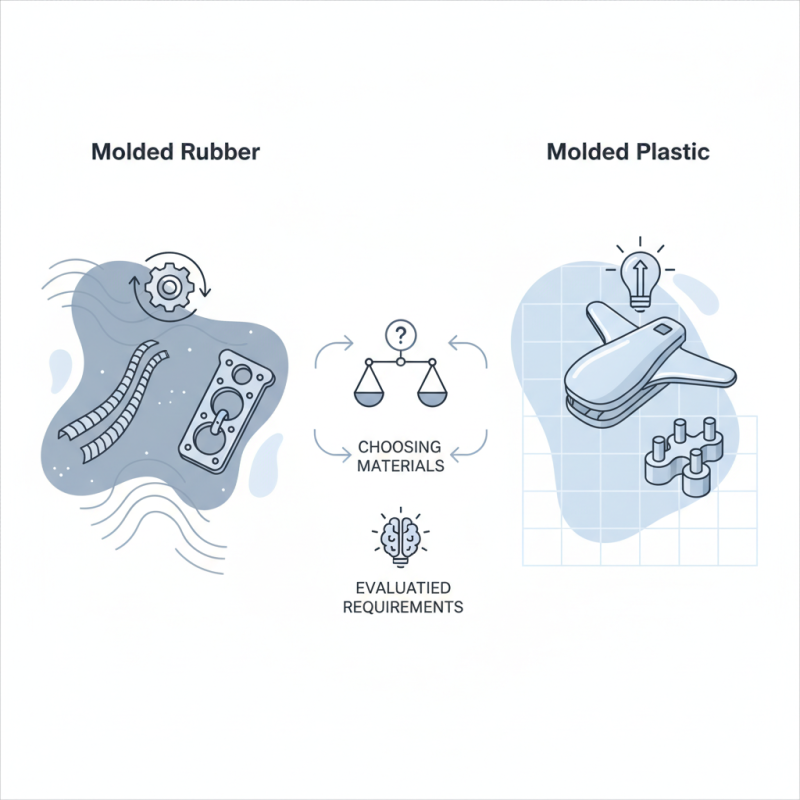
Molded rubber offers excellent elasticity and resistance to wear and tear. It can withstand harsh conditions and is often used for seals and gaskets. Plastic, on the other hand, is lightweight and easily molded into various shapes. It is suitable for both functional and aesthetic needs. Evaluating the specific requirements of your project is essential.
As you explore molded rubber and plastic options, consider the long-term performance and costs associated with each material. There are advantages and drawbacks to each choice. Don’t rush the decision-making process; reflect on your project's goals and constraints. The right selection can lead to greater product satisfaction and reliability.
Factors to Consider When Selecting Molded Rubber and Plastic Materials
When selecting molded rubber and plastic materials for your projects, several factors come into play. The specific application is critical. Consider the environmental conditions the materials will face. For instance, exposure to UV light or extreme temperatures can affect the performance of both rubber and plastic. Understanding these conditions helps in making an informed choice.
Durability is another key element. Molded rubber often offers superior resistance to wear and tear. It can withstand harsh conditions better than many plastics. However, plastics may provide a lighter option that is easier to mold in complex shapes. Balance the need for strength with ease of fabrication, as this can impact your project's timeline and budget.
Additionally, cost is always a consideration. Molded rubber can be more expensive upfront but may offer long-term savings in terms of durability. On the other hand, certain plastics may have a lower initial cost but can wear out quickly. Evaluating these factors requires careful thought. Don't rush the decision; each project is unique.
How to Choose Molded Rubber and Plastic for Your Projects? - Factors to Consider When Selecting Molded Rubber and Plastic Materials
| Material Type |
Application |
Durability |
Temperature Resistance (°C) |
Cost Per Unit ($) |
| Natural Rubber |
Seals, gaskets |
Moderate |
-50 to 80 |
0.50 |
| Silicone Rubber |
High-temperature applications |
High |
-60 to 200 |
2.00 |
| Neoprene |
Insulation, automotive |
Good |
-40 to 120 |
1.20 |
| PVC |
Pipes, fittings |
Moderate |
-15 to 60 |
0.30 |
| Polyurethane |
Foams, wheels |
Very High |
-30 to 100 |
1.50 |
| Polyethylene |
Containers, bottles |
Low |
-50 to 80 |
0.20 |
Understanding the Different Types of Molded Rubber and Plastic Available
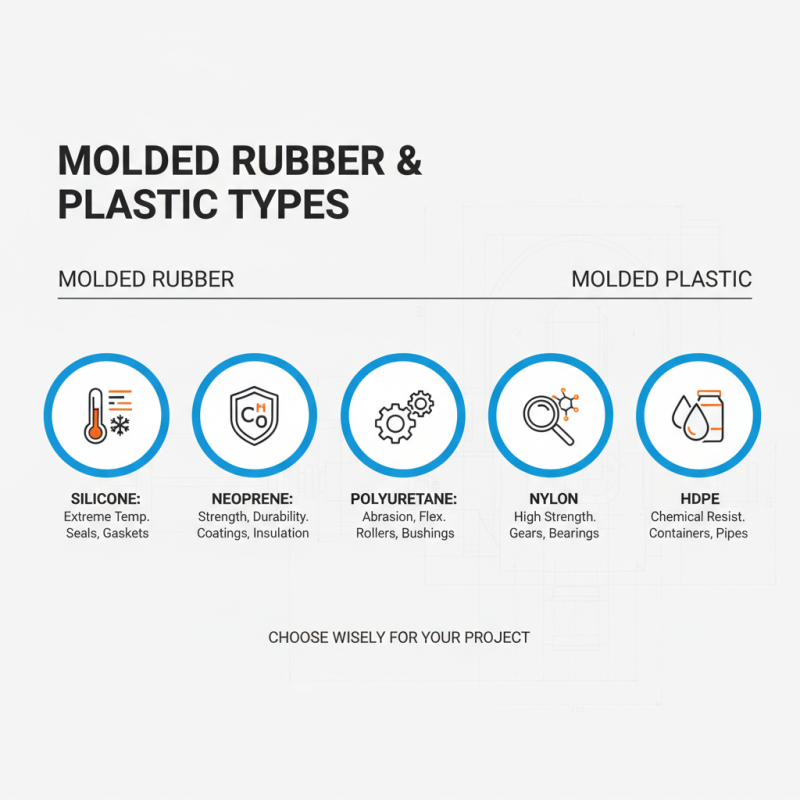
When choosing molded rubber and plastic for projects, understanding the available types is crucial. Molded rubber often includes materials like silicone, neoprene, and EPDM. Each type has unique properties and applications. For instance, silicone rubber is highly resistant to extreme temperatures and is often used for seals and gaskets. On the other hand, neoprene is known for its strength and durability, making it ideal for protective coatings and insulation.
In the realm of molded plastic, choices include thermoplastics and thermosets. Thermoplastics can be melted and reshaped, making them versatile for various applications like containers and automotive parts. Thermosets, however, harden permanently when cured, which means they are less flexible but offer great thermal stability. Selecting the right type requires balancing flexibility, durability, and application needs.
**Tips:**
Consider the environmental conditions your product will face. Will it be exposed to heat, moisture, or chemicals? Evaluate these factors before making a choice. Additionally, remember that not all molded materials are recyclable. This may impact long-term sustainability. Take time to research and weigh the pros and cons of each type. Don't rush your decision; it's important to get it right.
Evaluating Performance Characteristics for Your Specific Application
Choosing the right molded rubber and plastic materials is crucial for various applications. Performance characteristics directly impact functionality, durability, and safety. Evaluating these traits can be demanding, but with the right approach, clear assessment becomes possible.
When assessing materials, consider their hardness, flexibility, and abrasion resistance. According to a recent industry report, thermoplastic elastomers (TPEs) demonstrate a remarkable balance of stiffness and elasticity. They show a tensile strength range of 7 to 25 MPa, which makes them suitable for automotive and medical applications. On the other hand, traditional rubber compounds might excel in resilience but fall short in temperature tolerance.
Another critical aspect is environmental resistance. Some polymers, for instance, can degrade under UV exposure, leading to premature failure. This issue surfaced in testing with polyvinyl chloride (PVC), where a significant drop in mechanical properties was observed after UV exposure. As a designer, ensuring long-term performance in diverse conditions requires rigorous testing and a willingness to revisit material choices. Decisions grounded in comprehensive technical analysis can ultimately enhance project success.
Sustainability and Environmental Impact of Rubber and Plastic Choices
When selecting molded rubber and plastic, understanding their environmental impact is crucial. The production of synthetic rubber and plastics generates significant carbon emissions. Reports indicate that manufacturing processes can release up to 2.9 metric tons of CO2 for every ton produced. This not only contributes to climate change but also poses challenges to sustainability.
Recycling rates for rubber and plastic remain low. In 2020, only about 9% of plastic waste was recycled globally. The ramifications of this are evident in increasing landfill waste and ocean pollution. Over 8 million tons of plastics enter oceans annually, harming marine life. In contrast, some bio-based alternatives offer a lower environmental footprint, but they often come with trade-offs in performance and cost.
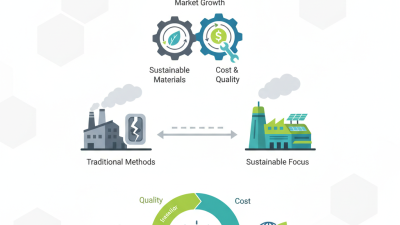
It's essential to weigh these factors for each project. Consider the lifecycle impact of materials chosen. While cheaper options may seem appealing, they can lead to long-term ecological damage. Striking a balance between performance and sustainability is key. Make informed decisions, and always contemplate the long-term consequences of material selection.
Cost Analysis: Budgeting for Molded Rubber and Plastic in Projects
When budgeting for molded rubber and plastic, it’s essential to have a clear understanding of your project requirements. These materials vary in cost based on factors like type, volume, and complexity. Researching multiple suppliers is crucial. A small difference in price can lead to large savings on large projects.
Tips: Always ask for samples before committing. Testing materials can save you costly mistakes later. Review your project’s long-term needs; cheaper options may lead to higher costs over time.
Factor in labor and processing costs. Changing designs can be expensive. Consider the durability and intended use of the products. Sometimes, investing more upfront can lead to better performance and less frequency of replacement.
Tips: Create a detailed budget that includes all potential expenses. This helps avoid unexpected costs. Engage with experienced professionals who can provide insights specific to your project needs. Their expertise can guide your choices effectively and ensure your budget aligns with quality requirements.