How to Choose the Right Rubber Edge Protector?
Choosing the right Rubber Edge Protector starts with understanding what it must protect. A sharp steel cabinet edge needs a different profile from a vehicle panel or a glass display. Measure the edge thickness, available mounting space, and length before comparing products. Then consider impact, abrasion, moisture, heat, and exposure to sunlight. Small details matter. A protector that is too loose can slip; one that is too tight may split during installation.
Material and fit work together. EPDM rubber is often selected for outdoor applications, while other rubber compounds may suit indoor equipment or specific temperature needs. Check the product’s stated operating range and resistance properties rather than relying on appearance alone. Look closely at the channel opening, wall thickness, and any internal grip features. If adhesive is required, confirm it matches the surface and expected conditions. Test a short section first. Real edges are rarely perfect.
A verified industry expert can add practical insight here. Suggested attribution for approval: “[Expert Name], [Rubber Product Engineering Title], says, ‘A reliable edge protector should fit the edge securely and match the environment it will face.’” This quotation is proposed wording, not a verified statement from a named expert. Before publication, replace the placeholders with an expert’s confirmed name, credentials, and approved words. This guide will compare key profiles, materials, measurements, and installation factors. It will also flag common trade-offs, because a neat fit is not always a durable fit. That deserves a second look.
What Is a Rubber Edge Protector and How Does It Work?
A rubber edge protector is a flexible profile fitted over an exposed corner or rim. It cushions contact, reduces scuffing, and helps keep sharp edges from damaging hands, cables, panels, or packed goods. When struck, the rubber deforms and spreads part of the force across a wider area. It may also grip the surface through friction. Think of a metal cabinet corner meeting a trolley: a snug rubber channel takes the first contact, rather than the painted edge. Not magic, though. A loose or poorly sized protector can shift, trap dirt, or leave the corner exposed.
The U.S. Bureau of Labor Statistics reported a 2.4 recordable-injury rate per 100 full-time workers in private industry in 2023.
This is not evidence that edge protectors prevent injuries, but it does underline the value of practical risk controls in workplaces.
To choose a suitable profile, check edge thickness, impact exposure, temperature, and contact with oils or cleaning fluids. Ask suppliers for material data, including hardness and compression-set results; ISO 48-4 and ISO 815-1 describe relevant test methods. For repeated knocks, inspect how well the protector stays seated after use. I would not rely on appearance alone. A soft sample can feel reassuring in the hand, yet fail quickly under a heavy, sharp load.
Which Edges and Hazards Need Protection?
Before choosing a rubber edge protector, identify what people or equipment actually contact.
Sharp sheet-metal corners can cut skin or damage clothing. Rough panel edges may scrape hands, while exposed edges near moving carts can cause repeated knocks. Cables passing over a metal lip face a different hazard: abrasion that gradually wears through their outer covering. Some edges look dangerous but are rarely touched. Others sit at hand height and get bumped all day. Small details matter.
Check the edge’s thickness, shape, and length, then consider where it sits. A protector for a stationary storage shelf may not stay secure on a vibrating vehicle panel. Oil, water, sunlight, temperature changes, and frequent cleaning can also affect rubber and its grip. Measure before ordering; a loose fit can slip, while an overly tight one may be difficult to install or may not seat evenly.
I would not treat a rubber strip as a replacement for guarding a serious impact or machinery hazard. It helps with contact at the edge, but it cannot solve every risk. After fitting, inspect the corners and high-contact spots again. Even a careful check can miss a short section.
Which Rubber Material and Profile Fit the Application?
Choosing the rubber means matching the environment, not just the edge shape. Nitrile rubber suits many oil-exposed edges, while EPDM is commonly selected for outdoor weather and water exposure. Heat, cleaning chemicals, and repeated flexing can change that choice. Check the compound’s stated service limits; “rubber” alone is not a specification. ASTM D2000 classifies rubber by properties including heat resistance, oil resistance, and hardness. Compare grades, not just material names. Small details matter.
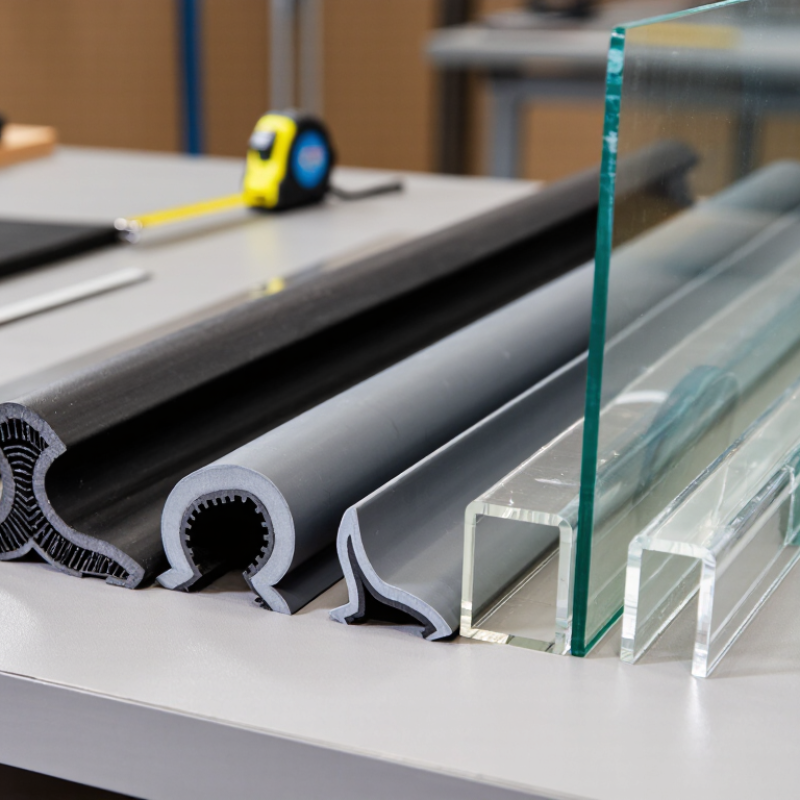
The profile must grip the edge without obstructing assembly. A U-channel can cover a sheet-metal lip; a bulb profile adds a soft contact point where parts meet. Measure the edge thickness, then check the channel’s inner width and retention features. A profile that is too tight may stretch or tear during fitting. Too loose, and it can creep off under vibration. ISO 48-4:2018 describes Shore hardness testing, and ISO 37:2017 covers tensile testing of rubber. Ask suppliers for test data using these methods, and compare results under like conditions. Test the actual assembly. I still recheck fit after temperature cycling; small gaps can appear where corners turn, and no catalogue drawing fully predicts that.
How to Choose the Right Rubber Edge Protector?
Typical continuous service temperature ranges for common rubber materials (°C)
Selection guide: EPDM is often chosen for outdoor weather and ozone exposure; NBR for contact with oils and fuels; neoprene for general weathering and moderate oil exposure; and silicone for applications needing a broad temperature range. These are indicative ranges only—limits vary by compound, and chemical compatibility should be checked for the specific application. Choose a U-channel for a simple edge fit, or a bulb or lip profile when cushioning or sealing is needed.
How Should Size, Fit, and Installation Be Evaluated?
Measure the panel edge before choosing a rubber protector. Check its thickness at several points, especially near bends, seams, or uneven joints. A protector that looks wide enough may still sit loosely on a thinner section. Compare the measured edge with the product’s stated grip range, not just its overall width. Leave room for any coating or trim that will remain in place. Small details matter.
Fit should feel secure without forcing the rubber open. Press a short sample onto the edge and check for gaps, twisting, or easy movement. If it slips off with a light pull, the grip may be too loose. If installation requires excessive force, the channel may be too narrow or the edge may be unusually thick. Temperature can also affect flexibility, so test parts in conditions close to their normal use. It is tempting to judge fit by appearance alone. That guess can be wrong.
Before installation, clean and dry the edge, then remove sharp burrs that could cut the material. Push the protector on gradually rather than stretching it along the edge; stretching can cause it to shrink back later. For corners, follow the product’s guidance and avoid tight bends that lift the seal. After fitting, check that it stays seated when gently pulled and that doors or panels still close freely. I still find corners easy to underestimate. A brief recheck after use can reveal movement that was not obvious at first.
How Can Durability and Maintenance Needs Be Assessed?
Assess durability under the conditions the protector will actually face: temperature swings, sunlight, oils, cleaning agents, and repeated impacts. Check the material specification, then compare it with test results for hardness, tensile strength, and compression set. ASTM D2000 classifies rubber heat resistance from 70°C to 250°C; these grades describe laboratory aging performance, not guaranteed service life. ASTM D395 measures compression set, which helps show whether an edge protector may stay flattened after prolonged clamping.
Useful data, but incomplete.
Ask for samples aged under relevant conditions, using methods such as ISO 188 for accelerated heat aging. Compare hardness and dimensions before and after testing, and inspect for cracks, tackiness, or edge lift. A protector near a sunny loading bay may age differently from one inside a cool cabinet.
That detail matters.
During routine checks, press the lip with a thumb and look for splits around fasteners; record wear rather than relying on memory. Set an inspection interval based on traffic and exposure, then shorten it if damage appears. This approach is not perfect: accelerated tests cannot reproduce every site condition. Still, they make material comparisons more defensible.