Get a custom solution for free

China Best Tapered Rubber Plugs Manufacturers and Suppliers

In the competitive world of manufacturing, China's tapered rubber plugs stand out. Experts recognize their vital role in various industries, including automotive and construction. James Lee, a renowned industry specialist, once stated, "Tapered rubber plugs are the unsung heroes of containment solutions." His insight highlights the significance of these products.

Tapered rubber plugs are essential for providing secure seals. They adapt to different sizes and shapes, ensuring a tight fit. This versatility is crucial for preventing leaks and maintaining pressure. However, not every manufacturer delivers consistent quality. It's important to evaluate options carefully, as subpar products can lead to issues.

China has many manufacturers specializing in tapered rubber plugs. Each offers unique advantages and potential drawbacks. Buyers should look for those with proven track records. Quality and reliability are key factors in making the right choice. The journey to find the best supplier can be challenging, but the right decision pays off in the long run.
China Best Tapered Rubber Plugs Manufacturers and Suppliers

What Tapered Rubber Plugs Are: Sealing Forms, Uses, and Core Functions

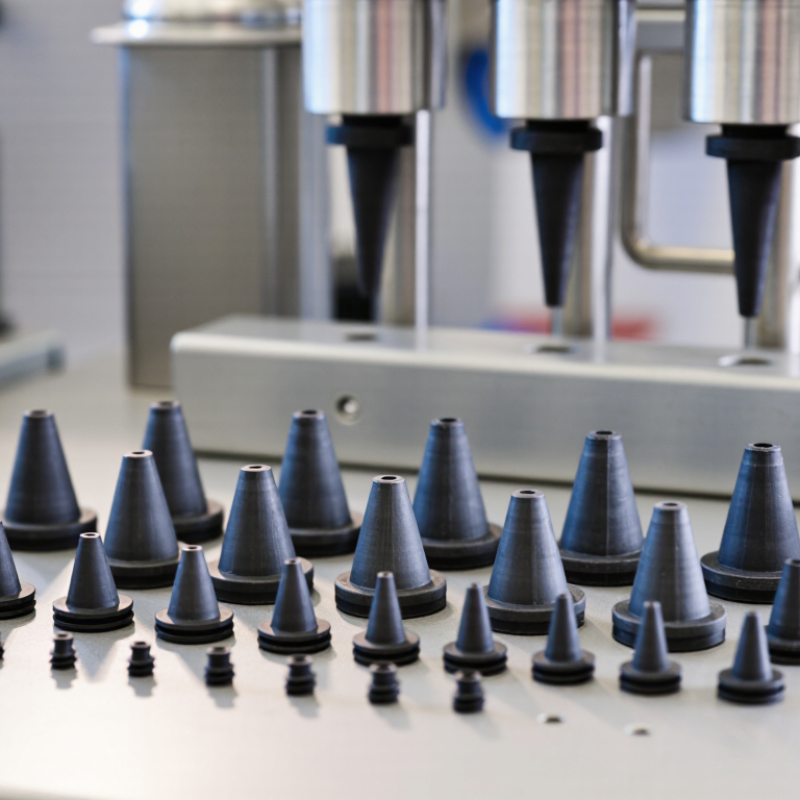
A tapered rubber plug is a removable seal shaped like a cone or truncated cone. Its narrow end enters a hole; the wider body creates a friction fit as it seats. This simple geometry helps cover openings, protect threads, and keep dust, splashes, or finishing chemicals out. Some plugs also mask holes during painting or coating. A small detail matters: the taper must match the opening. Grand View Research valued the global rubber market at USD 46.7 billion in 2023 and projected 5.3% annual growth through 2030. This broad market figure is not specific to plugs, but it highlights the importance of selecting suitable rubber compounds.

In workshops, tapered plugs are used in drilled ports, pipe ends, machined parts, and test assemblies. Their core function is temporary sealing, not guaranteed pressure containment. A plug may appear seated and still leak. Check the opening diameter, taper, rubber hardness, temperature, and contact chemicals before use. For example, a plug that fits a cool, dry bore may loosen when exposed to heat or oil. Measure the hole and test the fit under actual working conditions. Even careful selection has limits: worn, swollen, or cut plugs can lose their seal without obvious warning.

China Best Tapered Rubber Plugs Manufacturers and Suppliers - What Tapered Rubber Plugs Are: Sealing Forms, Uses, and Core Functions

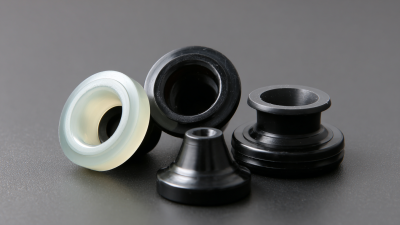
Tapered rubber plugs are flexible stoppers with a conical or stepped profile. They seal openings by forming an interference fit against the inside wall of a hole, tube, or vessel. The examples below describe common designs and uses; actual dimensions and material suitability depend on the application.

Sealing Form Typical Design Features Common Uses Core Function Selection Considerations
Plain conical plug Smooth, continuously tapered body; may have a flat or rounded top. Temporary closure of drilled holes, ports, and openings in containers or equipment. Creates a friction-based seal as the wider portion is pressed into the opening. Match the plug’s taper and diameter range to the opening; avoid excessive insertion force.
Stepped tapered plug Multiple diameter steps provide several insertion positions. Laboratory vessels, tubing, and openings with a range of internal diameters. Offers selectable fit points and helps limit insertion depth. Check each step diameter against the opening and confirm that the shoulder seats properly.
Hollow tapered stopper Tapered outer surface with a central passage. Setups where a tube, probe, or glassware accessory passes through a stopper. Seals around the outside while allowing a component to pass through the center. Select the bore size for the inserted component and check for a snug, non-damaging fit.
Flanged tapered plug Tapered body with a wider head or flange. Openings where a visible stop, pull surface, or cover over the rim is useful. Provides an insertion stop and a convenient surface for removal. Ensure the flange clears nearby parts and sits flat against the opening’s rim.
Protective masking plug Flexible tapered plug selected for temporary placement and removal. Covering holes or ports during finishing, coating, cleaning, or handling operations. Keeps unwanted material or debris out of an opening during a process. Confirm compatibility with process chemicals, temperature, and the required removal method.
Material options Common elastomers include natural rubber, EPDM, silicone, and nitrile rubber (NBR). Chosen according to the fluid, environment, required flexibility, and applicable product requirements. The material provides elastic recovery and contact pressure needed for a reusable or temporary seal. Verify chemical compatibility and service conditions with material data; no single rubber suits every application.

Note: A tapered rubber plug is generally a mechanical, contact-pressure seal. For pressure-retaining, safety-critical, or regulated uses, verify the plug’s dimensions, material, and operating limits for the specific application.
How Taper Angle, Size, and 40–90 Shore A Hardness Shape Plug Fit

China Best Tapered Rubber Plugs Manufacturers and Suppliers

A tapered rubber plug fits through controlled interference: its wider end compresses against the opening while the narrower tip guides insertion. Taper angle changes how quickly that compression builds. A shallow taper can offer gradual contact in a long bore, while a steeper taper may grip near the surface. Too steep, though, can make seating feel abrupt.

Size needs more than a nominal opening diameter. Measure the bore at several points, especially if it is molded or slightly oval. Compare those readings with the plug’s small-end and large-end diameters, plus its usable length. A plug that bottoms out too early may leave a visible gap. In practice, the first trial is rarely perfect. A small fit sample helps.

Hardness, measured in Shore A, affects insertion and retention. Around 40 Shore A, rubber is generally more compliant and can conform to modest surface variation, but excessive compression may distort the plug. Near 90 Shore A, it holds shape better and can resist movement, yet may need more insertion force. The useful range depends on the bore, temperature, and removal frequency. Check the fit by hand, then inspect for rolling, edge gaps, or permanent deformation after removal. That last check is easy to overlook.

Which Elastomers Suit Chemical, Heat, and Reusable-Plug Demands?

For tapered rubber plugs, choose the elastomer by exposure conditions, not color or price. EPDM often suits hot water, steam, and weathering, but performs poorly in many oils. NBR is a practical choice for petroleum oils at moderate temperatures. FKM generally offers stronger resistance to oils and many chemicals, while silicone handles heat and stays flexible. It may tear more easily during repeated insertion. Fit matters.

Industry elastomer selection charts commonly place approximate upper service temperatures near 150°C for EPDM and 200°C for FKM or silicone. Treat these as screening figures; formulation, fluid concentration, and exposure time can change performance. ASTM D471 and ISO 1817 describe tests for rubber’s changes after liquid exposure, including mass and volume change. For reusable plugs, check compression recovery under ISO 815-1, then repeat insertion tests on the actual tapered part. A plug can look fine. That can mislead. Measure leakage, swelling, surface damage, and removal force after exposure at the real operating temperature. Even a careful chart cannot replace a small, documented trial.

Choosing Elastomers for Tapered Rubber Plugs

Representative upper continuous-service temperature guidelines for common plug elastomers.

Silicone and FKM commonly suit higher-temperature applications; NBR is often selected for oils and fuels, while EPDM is commonly used with water, steam, and weather exposure. Chemical compatibility depends on the specific fluid, concentration, temperature, and compound formulation. For reusable plugs, also check compression set, tear strength, and fit. Values shown are typical guidelines, not guaranteed limits; confirm the grade’s datasheet before use.

How China Manufacturers Mold Plugs and Inspect Tolerances to ISO 3302-1

Tapered rubber plugs are shaped to fit openings securely, but their accuracy begins before molding. Manufacturers review the drawing, rubber hardness, taper angle, and working temperature before selecting a compound and designing the mold. The parting line matters. Poor placement can leave flash where a plug must seal.

During production, rubber is placed in a heated mold and cured under controlled pressure and time. Operators monitor temperature and inspect samples for incomplete filling, bubbles, and uneven edges. After curing, plugs cool before measurement because heat can temporarily change their dimensions. Small details matter, especially at the narrow tip.

ISO 3302-1 provides dimensional tolerance classes for molded rubber products. The correct class should be stated on the drawing and matched to the plug’s function; the standard does not give every design the same acceptable variation. Inspectors can check overall length, end diameters, and taper using calibrated gauges or suitable measuring tools. They should record results across multiple samples, not rely on one apparently perfect part. A mold can look excellent and still produce drift after repeated cycles. That is worth checking. Measurements also depend on consistent handling and conditioning, so suppliers should document their method and flag dimensions that remain difficult to control.

How to Compare Chinese Suppliers: ASTM D2240 Testing, MOQ, and Lead Time

When comparing Chinese tapered rubber plug suppliers, ask how they measure hardness under ASTM D2240. The method uses a durometer, but results depend on the scale, specimen thickness, temperature, and reading time. Confirm the specified Shore scale and request a recent test report tied to the quoted compound.

A hardness number alone is not enough.

Check whether the supplier tests production samples or only raw material samples. Ask for the test date, batch reference, and measurement range.

Small detail. Big consequences.

For tapered plugs, also review dimensions at the narrow and wide ends; hardness cannot confirm a plug will seal the intended opening.

Request a sample before approving a large order.

Compare minimum order quantity against your forecast and packaging needs. A low MOQ may still involve setup charges, while a larger order can tie up inventory.

Ask for separate lead times for sampling, tooling, production, and inspection. Get the assumptions in writing, including whether holidays or material shortages affect the schedule.

One point can stay uncertain: a quoted lead time is an estimate, not a guarantee. Track actual sample and production dates before relying on it for a tight launch.