Get a custom solution for free
-
Phone
-
E-mail
-
Whatsapp
-
Wechat

Choosing Rubber Extrusions is not simply a matter of selecting the lowest price or the cleanest profile. The correct choice must match the product’s working environment. Temperature, pressure, movement, chemicals, weather, and installation space all matter. A door seal exposed to sunlight needs different protection from a gasket compressed inside a heated machine. Small details can decide long-term performance.
John S. Dick, a respected rubber technologist and author, offers a practical principle: “The ultimate test of a rubber compound is its performance in the application.” That idea should guide every extrusion decision. EPDM may suit outdoor weather sealing. Silicone can perform across demanding temperature ranges. Nitrile may be more appropriate where oil resistance matters. These examples are useful, but they are not automatic answers.
Profile design deserves equal attention. A hollow bulb, solid cord, or custom channel will behave differently under compression. Check the drawing, tolerances, hardness, splice method, and expected recovery. Ask for test data, not only a material name. A sample may fit perfectly on the first day, yet lose resilience after repeated compression. That possibility is easy to overlook.
There is no universal best compound. Sometimes, the first specification is wrong. Reconsider it.
A reliable selection process combines supplier experience, laboratory evidence, and real service conditions. It should also include aging tests, dimensional checks, and installation trials. When these steps are skipped, a seemingly minor sealing problem can become expensive equipment downtime. The goal is not merely to buy Rubber Extrusions. It is to choose a dependable sealing solution that remains suitable after heat, motion, pressure, and time begin working against it.
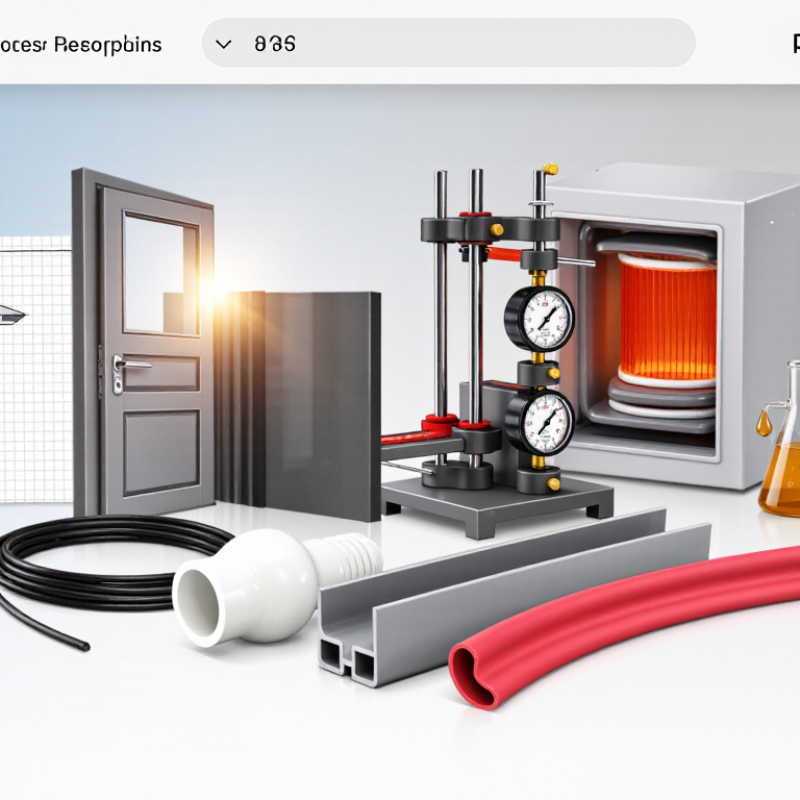
Rubber extrusion profiles are continuous shapes made by pushing elastomer through a shaped die. Their function depends on geometry, material, and installation conditions. A hollow bulb profile can seal a cabinet door, while a U-channel can protect a sharp panel edge. These profiles may look similar, but their performance can differ greatly.
Start with the movement the profile must handle. A sealing strip may face compression, sliding, vibration, or repeated opening. Measure the gap at its smallest and largest points. A profile that seals perfectly on a workbench may fail after thermal expansion. It happens more often than expected. Consider temperature, sunlight, moisture, oils, and cleaning chemicals before choosing the rubber compound. EPDM often suits outdoor exposure, while silicone supports wider temperature ranges. Material compatibility still requires testing.
The extrusion’s dimensions need practical attention. Check wall thickness, corner radius, hardness, and compression recovery. Thin walls reduce force but may collapse during installation. Harder rubber can resist wear, yet it may not seal uneven surfaces well. I have seen projects focus on the drawing and overlook the fitting tool. That small oversight caused stretching at the corners. Allow for installation clearance and specify acceptable tolerances. Request samples, test them on the real substrate, and inspect the seal after repeated cycles. A profile is not only a shape; it is a working interface between two surfaces.
| Rubber Extrusion Profile | Typical Cross-Section | Primary Project Function | Common Applications | Key Selection Factors | Common Material Options | Design Notes |
|---|---|---|---|---|---|---|
| Solid Strip | Uniform rectangular, square, or custom strip | Creates a continuous seal, spacer, bumper, or protective edge | Access panels, covers, machine guards, enclosure joints, and general sealing | Width Thickness Compression Surface finish | EPDM, silicone, neoprene, nitrile, and natural rubber | Suitable when the sealing gap is consistent and the profile does not need a hollow cavity. |
| D-Shaped Seal | Solid or hollow D-shaped bulb with a flat mounting base | Provides compression sealing against a closing or mating surface | Doors, hatches, cabinets, windows, vehicle compartments, and equipment enclosures | Bulb height Wall thickness Closing force Gap range | EPDM, silicone, neoprene, and thermoplastic elastomers | A hollow bulb usually requires less closing force than a solid bulb and can accommodate greater variation in the gap. |
| P-Shaped Seal | Rounded bulb joined to a flat or mounting leg | Seals a joint while providing a broad contact area | Access doors, electrical cabinets, glazing systems, and removable panels | Bulb diameter Leg length Mounting method Deflection | EPDM, silicone, neoprene, and nitrile | The mounting leg should be supported so that the bulb compresses rather than rolls or twists during closure. |
| U-Channel | U-shaped channel that fits over an edge | Protects an edge and can provide a friction fit or secondary seal | Sheet metal edges, glass panels, vehicle bodies, machine guarding, and access covers | Material thickness Channel depth Retention Bend radius | EPDM, neoprene, PVC, silicone, and thermoplastic elastomers | The channel should match the substrate thickness closely; an oversized channel may slip, while an undersized channel may distort the edge. |
| U-Channel with Bulb | Edge-gripping U-channel with an attached sealing bulb | Combines edge protection, retention, and compression sealing | Doors, hatches, sheet-metal enclosures, vehicle openings, and industrial panels | Grip range Bulb position Closing force Corner behavior | EPDM, silicone, neoprene, and thermoplastic elastomers | Use a suitable internal reinforcement only when the channel must resist pull-off or repeated installation. |
| H-Section | Two opposing channels connected by a central web | Joins, separates, or seals two panels or substrates | Partition panels, glazing, signage, covers, and removable sheet assemblies | Panel thickness Channel depth Joint movement Retention | EPDM, silicone, neoprene, and thermoplastic elastomers | The central web must allow the required movement without transferring excessive stress to the joined panels. |
| Bulb Seal with Metal Carrier | Flexible bulb mounted on a reinforced gripping channel | Forms a durable compression seal on an irregular or exposed edge | Industrial doors, vehicle compartments, engine covers, and heavy equipment enclosures | Carrier grip Bulb compression Temperature Vibration | EPDM or neoprene with steel or other corrosion-resistant reinforcement | The carrier improves retention, but the bend radius and installation direction must be controlled to prevent kinking. |
| Lip Seal | Flexible projecting lip, often with a mounting base | Deflects against a surface to block dust, water, air, or light contact | Sliding doors, machine guards, covers, windows, and rotating or moving equipment | Lip angle Contact force Wear Travel direction | EPDM, silicone, polyurethane, nitrile, and thermoplastic elastomers | The lip should contact the mating surface lightly enough to permit movement but firmly enough to maintain continuity. |
| Wiper Seal | Flexible blade or lip designed to sweep across a surface | Removes contaminants and limits fluid or dust entry during movement | Sliding mechanisms, hydraulic equipment, doors, windows, and linear motion systems | Surface speed Friction Contaminants Wear resistance | Polyurethane, nitrile, EPDM, silicone, and thermoplastic elastomers | Specify the expected movement, counterface finish, and lubricant compatibility to limit premature wear. |
| Glass-Run Channel | Channel with flexible sealing lips around a glazing edge | Guides and seals glass or transparent panels while reducing vibration | Windows, equipment viewing panels, vehicle glazing, and framed enclosures | Glass thickness Channel geometry Friction UV exposure | EPDM, silicone, flocked elastomers, and thermoplastic elastomers | The profile must retain the glass securely without applying excessive point pressure or restricting intended movement. |
| Flame-Resistant Seal | Custom solid, hollow, or bulb profile with specified fire performance | Seals joints while helping meet defined flammability or smoke requirements | Electrical enclosures, rail interiors, public transport equipment, and industrial systems | Flammability rating Smoke limits Temperature Compression set | Specially formulated silicone, EPDM, neoprene, and other qualified elastomers | Fire performance is formulation- and test-method-specific; verify the required standard before approving the compound. |
| High-Temperature Silicone Profile | Custom solid, bulb, channel, or lip geometry | Maintains sealing and flexibility across a broad temperature range | Ovens, lighting systems, laboratory equipment, heat-processing machinery, and outdoor enclosures | Operating temperature Compression set Chemical exposure Tear strength | Silicone rubber in solid, sponge, or cellular grades | Silicone performs well at high and low temperatures but may have lower abrasion and tear resistance than some alternative elastomers. |
| Oil-Resistant Profile | Custom strip, bulb, lip, or channel designed for fluid exposure | Maintains dimensional stability and sealing performance around oils or fuels | Engines, pumps, hydraulic systems, machinery, and fluid-handling equipment | Fluid type Temperature Swelling Pressure | Nitrile, hydrogenated nitrile, fluorocarbon, and selected thermoplastic elastomers | Oil resistance depends on the exact fluid, temperature, exposure time, and compound formulation; generic compatibility assumptions should be avoided. |
| Self-Adhesive Rubber Strip | Flat or shaped extrusion with pressure-sensitive adhesive backing | Provides quick positioning, cushioning, vibration isolation, or light-duty sealing | Panels, cabinets, furniture, signs, equipment covers, and interior assemblies | Adhesive type Surface energy Temperature Peel load | EPDM, neoprene, silicone, PVC, and polyurethane | The bonding surface should be clean, dry, and compatible with the adhesive; adhesive-backed strips are not automatically suitable for structural loads. |
| Co-Extruded Profile | Profile combining two or more elastomer hardnesses or materials | Combines rigid mounting, flexible sealing, low-friction contact, or color identification in one part | Glazing, access doors, automotive trim, equipment housings, and complex assemblies | Material bonding Hardness zones Shrinkage Tolerance | Combinations of silicone, EPDM, thermoplastic elastomers, PVC, and other compatible materials | Confirm chemical bonding or mechanical interlock between materials, as well as the effect of different shrinkage rates during processing. |