How to Choose the Best Rubber Isolators for Your Needs?
Choosing the right rubber isolators is crucial for various applications, from machinery to automotive. According to a report by the Global Rubber Isolators Market, the sector is expected to grow significantly over the next five years, driven by rising demand for vibration control solutions. These isolators help in minimizing noise and vibration, ensuring better performance and comfort.
However, not all rubber isolators are created equal. Factors such as material composition, load capacity, and environmental conditions play vital roles in selection. A study from the Institute of Vibration and Acoustics revealed that improper choice can lead to failures, costing industries thousands in repairs and downtime.
Understanding your needs is essential. Are you working with heavy machinery or delicate electronics? The right isolator can make a difference. Yet, many users overlook critical specifications. This oversight can hamper efficiency and longevity. Taking the time to assess requirements ensures you choose the best rubber isolators for your specific application, enhancing reliability and performance.
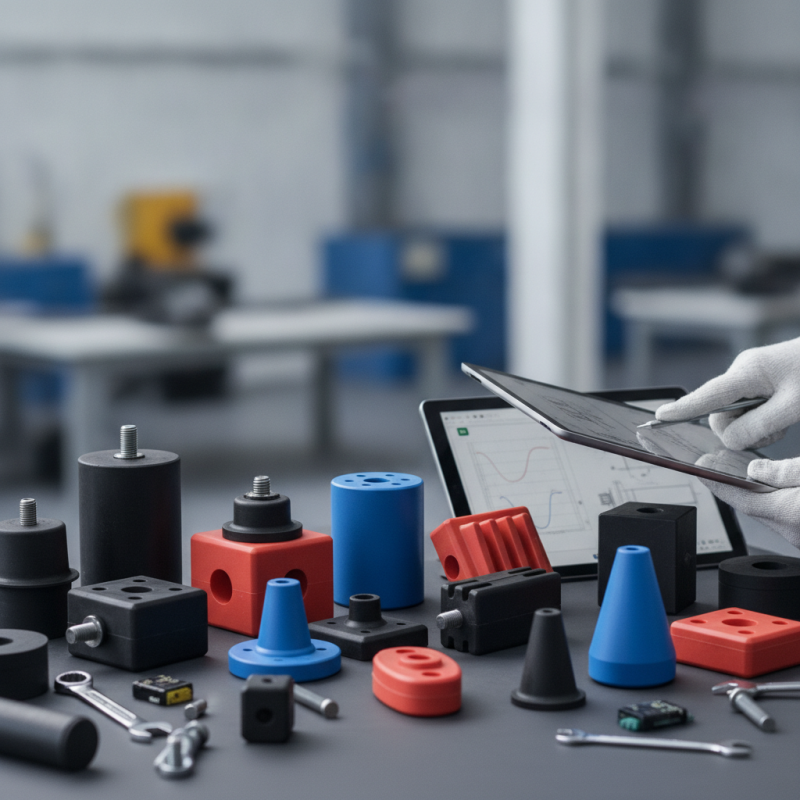
Understanding the Basics of Rubber Isolators and Their Functions
Rubber isolators play a significant role in various applications. They are essential for vibration control, noise dampening, and shock absorption. According to a report by the National Institute of Standards and Technology, effective isolation can reduce equipment wear by up to 30%. This statistic highlights their importance in industrial settings.
Understanding the basic functions of rubber isolators can enhance decision-making. These components absorb kinetic energy and minimize vibration transfer. A study by the International Society of Acoustics reveals that well-designed isolators can lower sound transmission by 50% in certain frequencies. This data underscores their value in sectors like construction and manufacturing.
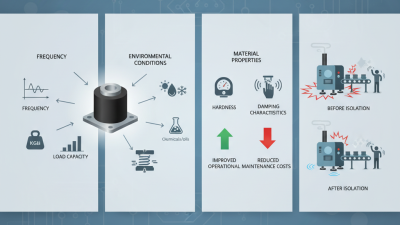
Choosing the right rubber isolator requires careful consideration. Factors such as material hardness, load capacity, and environmental conditions are critical. Users often overlook the impact of temperature fluctuations on rubber performance. A mismatch in specifications might lead to premature failure, underscoring the need for thorough research. Balancing technical specifications with real-world applications is not always straightforward, yet it is essential for optimal performance.
How to Choose the Best Rubber Isolators for Your Needs?
| Isolator Type |
Hardness (Shore A) |
Load Capacity (lbs) |
Application |
Frequency Range (Hz) |
| Standard Rubber Isolator |
40 - 60 |
500 |
General Machinery |
20 - 150 |
| High Load Isolator |
50 - 70 |
1500 |
Heavy Machinery |
10 - 100 |
| Vibration Isolation Mount |
30 - 50 |
300 |
HVAC Equipment |
15 - 200 |
| Silicone Isolator |
60 - 80 |
400 |
Electrical Equipment |
5 - 150 |
| Neoprene Isolator |
40 - 60 |
600 |
Automotive Applications |
10 - 120 |
Identifying Your Specific Needs and Applications for Rubber Isolators
When choosing rubber isolators, it's crucial to understand your specific needs. These isolators serve various purposes, from reducing vibrations to supporting heavy loads. According to industry reports, approximately 70% of machinery failures are related to vibration issues. This underscores the importance of selecting the right isolators for each application.
Consider the environment where the rubber isolators will be used. High temperatures, exposure to chemicals, or moisture can affect their performance. For example, standard rubber may degrade faster in chemical-rich environments compared to specialized materials. You might need to evaluate the operational load as well. Overloading an isolator can lead to premature failure and costly downtimes.
Another factor is the frequency of vibration you are dealing with. Rubber isolators often have a specific frequency range where they perform best. If you often operate machinery with varying frequencies, you may have to look into multiple isolators. Performance data suggests nearly 30% inefficiency when using mismatched isolators in critical applications. Keep in mind that each application is unique; one size does not fit all. Reflecting on these factors can lead to better decisions in isolator selection.
Evaluating the Key Factors in Selecting Rubber Isolators
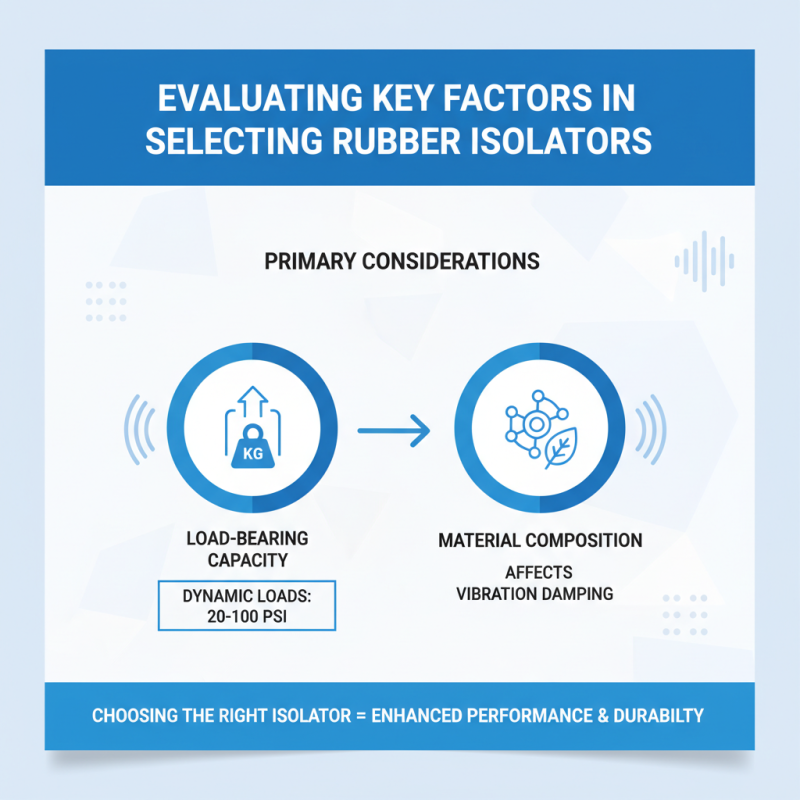
When selecting rubber isolators, understanding key factors is crucial. One primary consideration is the load-bearing capacity of the isolator. According to industry reports, isolators primarily handle dynamic loads ranging from 20 to 100 psi. Choosing an isolator with the appropriate load rating ensures enhanced performance and durability. The material composition also affects their effectiveness in vibration dampening.
Another important factor is the frequency of the vibrations being mitigated. Different rubber compounds excel at absorbing specific frequency ranges. For example, isolators made of natural rubber perform well at lower frequencies, while synthetic options can handle higher frequencies. Studies indicate that a 20% reduction in vibration transmission can be achieved by selecting the right isolator based on frequency compatibility.
Temperature and environmental conditions are also vital. Many isolators are designed for specific operational temperatures. Failure to consider this can lead to premature wear. Industry data show that performance can decrease by up to 40% when rubber is exposed to unfavorable temperatures. Analyzing these specifications helps identify the most reliable isolator for your needs, ultimately optimizing equipment performance.
Comparing Different Types and Materials of Rubber Isolators
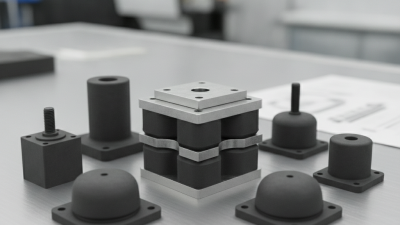
When selecting rubber isolators, consider the material and type that best suits your application. Common materials include natural rubber, neoprene, and silicone. Each offers different properties such as durability, temperature resistance, and vibration damping. Natural rubber provides excellent resilience but may not perform well in extreme temperatures. Neoprene is versatile for various conditions but has limited elasticity. Silicone is highly resistant to heat and aging, making it ideal for high-temperature applications.
According to the latest market data reports, the rubber isolators market is expected to grow at a CAGR of 5.7% from 2021 to 2028. This growth reflects the increasing demand for noise and vibration control in the automotive and industrial sectors. The choice of rubber isolator can significantly impact equipment lifespan and performance. For example, improper selection may lead to excessive wear, resulting in costly repairs.
Assessing the specific requirements of your project is crucial. Consider factors like load-bearing capacity and operational environment. A mismatch between isolators and their function can lead to system inefficiencies. For instance, using a softer isolator than needed can compromise noise isolation. Meanwhile, too rigid a choice can transmit vibrations, negating the isolator's purpose. Understanding these nuances is vital for optimal performance.
Installation and Maintenance Tips for Optimal Performance of Isolators
When installing rubber isolators, attention to detail is vital. Start by ensuring the surface is clean and level. This minimizes uneven pressure on the isolators. Use proper tools to position them accurately.
Incorrect alignment can lead to premature wear or failure. Always check manufacturer guidelines for load capacities.
Overloading will compromise performance.
Regular maintenance is key to extending the lifespan of rubber isolators. Inspect them frequently for signs of wear or degradation.
Cracks or softening indicate the need for replacement. Cleaning the isolators is essential. Dust and debris can hinder their performance. A simple wipe with a damp cloth can prevent buildup.
Consider environmental factors that may affect the isolators. Extreme temperatures and exposure to chemicals can cause damage.
Reflect on your installation choices if isolators fail prematurely. Proper adjustments may improve performance.
Taking these steps will ensure your rubber isolators function optimally.