Get a custom solution for free

China Top 10 Rubber Isolation Mount Manufacturers

Rubber Isolation Mounts help reduce vibration, noise, and shock between equipment and its supporting structure. They appear in applications such as pumps, generators, HVAC systems, compressors, and industrial machinery. Yet a mount that works well on one machine may perform poorly on another. Load, operating frequency, temperature, movement, and installation space all matter.

This guide introduces ten manufacturers in China for buyers beginning a supplier search. It considers practical factors: product variety, material and bonding options, engineering support, manufacturing controls, documented specifications, and export experience. These points can help narrow a shortlist, but they do not replace testing against a real application. A polished catalog is not proof of consistent performance. Ask for load-deflection data, drawings, material details, and relevant quality documents; then confirm that the proposed part fits your operating conditions. Small details count. Even a few millimeters of height or a change in rubber hardness can affect alignment and isolation.

The list should be treated as a starting point, not a final verdict. Supplier capabilities and product lines can change, and public information may not show the full picture. Compare responses, request samples when practical, and check how clearly each company explains limitations as well as strengths. That can be revealing. A careful supplier may ask for operating loads and vibration data before recommending a mount. This takes time, but it is more dependable than choosing by price alone. One point deserves reflection: rankings simplify a market that is rarely simple.
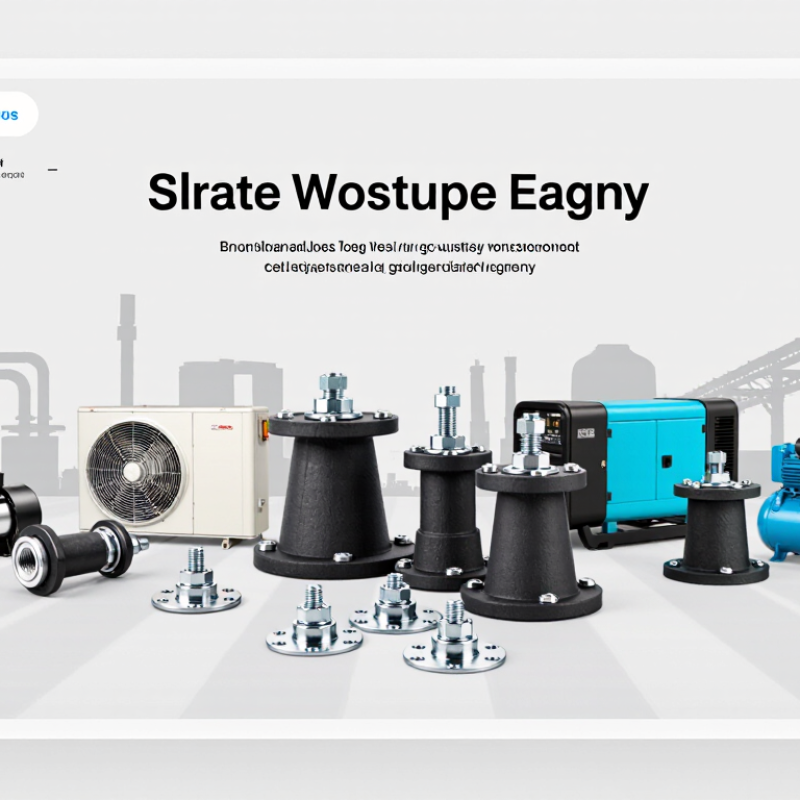
China Top 10 Rubber Isolation Mount Manufacturers

What Rubber Isolation Mounts Are and How They Function

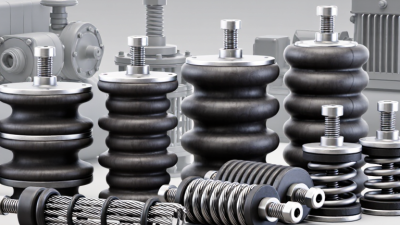
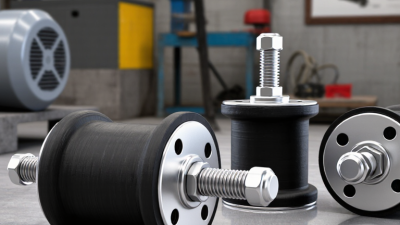
Rubber isolation mounts are compact components that support equipment while reducing vibration transfer to a frame or floor. Many designs bond an elastomer to metal plates, studs, or sleeves. The rubber deforms under load, absorbing part of the motion and converting some mechanical energy into heat. Not magic. Their flexibility also lets them accommodate small misalignments and brief shocks.

In operation, a mount behaves like a spring with damping. Its stiffness and shape influence the natural frequency, while rubber compound, temperature, and load affect damping. When a motor starts, for example, the mount compresses and shifts slightly as the housing vibrates.

Correct selection depends on equipment mass, operating speed, mounting pattern, and expected forces. A mount that is too stiff may pass vibration through; one that is too soft may allow excessive movement. That trade-off is easy to underestimate.

Installation matters as much as the part. Mounts should sit squarely, carry reasonably balanced loads, and avoid being squeezed beyond their intended range. Oil, heat, ozone, and repeated flexing can gradually change rubber properties, so inspect for cracks, hardening, separation, or sagging.

One detail gets overlooked: tightening hardware unevenly can preload the rubber and alter performance.

Even careful calculations cannot remove every uncertainty; vibration measurements after commissioning may reveal a mismatch.

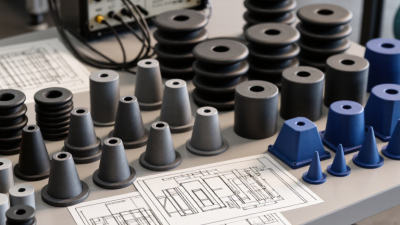
Common Applications of Rubber Isolation Mounts

Rubber isolation mounts are used wherever machinery transfers vibration into a frame, floor, or nearby equipment. In HVAC systems, mounts beneath fans and compressors reduce vibration traveling through ducts and building structures. They also help limit rattling in equipment rooms. Not silence, exactly.

Pumps, motors, and generators use mounts to soften operating vibration and small impacts during startup or shutdown. In vehicles and industrial machines, rubber supports can isolate cabs, seats, and control panels from engine and road movement. Sensitive instruments may also use compact mounts to reduce disturbance from nearby machinery.

The right design depends on load, vibration frequency, temperature, and exposure to oils or cleaning fluids. A mount chosen by load rating alone may still perform poorly. That mistake is easy to make.

Installers should check alignment and avoid excessive compression, which can shorten service life. Periodic inspection matters: cracks, permanent flattening, or loose fasteners can signal a problem. Rubber mounts reduce transmitted vibration, but they do not correct an unbalanced rotor or a poorly aligned shaft.

Key Factors in Comparing Chinese Manufacturers

When comparing Chinese rubber isolation mount manufacturers, begin with the operating conditions, not the catalog photo. Share the load per mount, vibration range, temperature, and available installation space. Ask for drawings that show dimensions, tolerances, and metal insert details. Fit matters. A mount that looks similar may behave differently under repeated compression.

Request data for static deflection, stiffness, and fatigue testing, and check how each result was measured. Rubber hardness alone cannot predict isolation performance. Ask whether samples can be tested under conditions close to your application. Also review compound options and metal-to-rubber bonding controls. Evidence beats promises. A polished catalog can still leave gaps, so ask for dated reports and clear acceptance criteria.

Production consistency deserves equal attention. Ask how incoming rubber, molded parts, and finished mounts are inspected, and whether batch records can be traced. Discuss tooling ownership, sample lead time, production capacity, and how design changes are approved. These details affect both launch schedules and later replenishment. Compare quotations carefully: a low unit price may exclude testing, special packaging, or tooling. Communication matters, too. If technical questions receive vague answers, clarify them before ordering. Even experienced buyers can miss a detail, such as bolt access after installation; a simple fit check can prevent an avoidable redesign.

China Top 10 Rubber Isolation Mount Manufacturers - Key Factors in Comparing Chinese Manufacturers

Use these ten evidence-based criteria to compare suppliers. The rows are evaluation factors, not a ranked list of companies or claims about any specific manufacturer.

No. Comparison factor What to evaluate Useful evidence or reference Why it matters
1 Dynamic performance data Request dynamic stiffness or transmissibility data for the intended load, frequency, temperature, and direction of vibration. Confirm the test conditions match the application. Test reports; ISO 10846-1 provides principles and guidelines for laboratory measurement of vibro-acoustic transfer properties of resilient elements. ISO 10846-2 covers a direct method for measuring dynamic transfer stiffness of resilient supports for translatory motion. Isolation performance depends on the system and test conditions; a single stiffness or isolation figure may not describe performance across the operating range.
2 Load capacity and deflection Compare rated static load, working deflection, allowable load range, and any stated limits for shock or overload. Check the data for the exact mount geometry and orientation. Product drawings, load-deflection curves, and application-specific calculations or test reports. Incorrect load selection can affect mount deflection, alignment, durability, and vibration isolation.
3 Rubber compound and operating environment Confirm the proposed elastomer and its documented temperature range, fluid compatibility, ozone exposure limits, and other environmental constraints for the application. Compound data sheets and test reports. ISO 1817 specifies methods for determining the effect of liquids on vulcanized or thermoplastic rubber. Rubber properties can change with temperature, fluids, and aging; compatibility should be checked for the actual service environment.
4 Compression set and material consistency Review compression-set results, test conditions, and compound identification. Ask how compound batches and product lots are traced. Material test reports; ISO 815-1 specifies methods for determining compression set of vulcanized or thermoplastic rubber. Compression set is one indicator of how a rubber specimen retains deformation after compression under defined test conditions.
5 Mechanical properties Check tensile strength, elongation at break, hardness, and the test method and specimen details behind each reported value. Material certificates and laboratory reports; ISO 37 specifies methods for determining tensile stress-strain properties of vulcanized or thermoplastic rubber. Mechanical test results help compare compounds, but should not be treated as a substitute for component-level design and performance testing.
6 Dimensions and tolerances Compare controlled drawings, critical dimensions, metal insert positions, and inspection limits. Confirm how deviations are approved and recorded. Approved drawings and dimensional inspection reports; ISO 3302-1 specifies dimensional tolerances for moulded, extruded, and calendered rubber products. Dimensional variation can affect assembly fit, preload, and the way the mount carries load.
7 Metal-to-rubber bonding and corrosion protection Ask how inserts are prepared and bonded, how bond integrity is inspected, and what corrosion protection is specified for metal components. Process-control records, bond or adhesion test reports, coating specifications, and sample inspection results. Bond integrity and metal protection are important where the mount combines elastomer and metal parts or operates in a corrosive environment.
8 Quality management and traceability Review the scope and current status of the supplier’s quality-management certification, lot identification, inspection records, and corrective-action process. Current certificate and audit evidence; ISO 9001:2015 sets requirements for quality management systems. A certificate is useful evidence of a management system, but does not by itself establish that a particular product meets its specification.
9 Regulatory and substance documentation Specify the destination market and request applicable declarations, substance information, and supporting documentation for the exact product or material. Product-specific declarations and supporting records against requirements applicable to the intended market, such as relevant REACH or RoHS obligations. Regulatory obligations depend on product type, materials, intended use, and market; verify applicability rather than relying on a generic statement.
10 Sampling, production control, and delivery Agree on sample approval, change notification, production inspection, packaging, lead-time assumptions, and procedures for nonconforming products. Approved sample, control plan or inspection plan, change-control procedure, and written delivery and packaging requirements. Clear controls help maintain consistency between approved samples and subsequent production orders.

Profiles of Ten Leading Rubber Isolation Mount Manufacturers in China

China’s rubber isolation mount manufacturers serve automotive, machinery, rail, and building applications. CAAM’s 2023 industry statistics report that China produced 30.16 million vehicles, an 11.6% year-on-year increase. This scale helps explain demand for vibration-control components, but it does not prove that every supplier meets the same engineering standard. Small differences matter. Mount geometry, rubber compound, and bonding quality can change how well a part handles heat, load, and repeated vibration.

These ten manufacturer profiles are best read as a practical comparison, not a strict ranking. Some firms focus on molded rubber-to-metal mounts for engines and compressors. Others emphasize custom tooling, railway components, or high-volume automotive supply. Look for evidence of material testing, production traceability, and clear load-deflection data. A neat catalogue is not enough. Ask how a mount performs after temperature cycling and long-term compression, and whether test conditions match your application. Public company information can be uneven, so some comparisons remain incomplete. That limitation deserves attention. Procurement teams should verify certificates, sample dimensions, and test reports directly before approving a supplier.

Typical Density Ranges of Rubber Materials Used in Isolation Mounts

The chart compares representative density ranges for common elastomers used in vibration-isolation products. Actual compound density varies with grade, fillers, and formulation; these ranges are material references, not company-specific data or a manufacturer ranking.

How to Choose a Manufacturer for Your Application

When comparing rubber isolation mount manufacturers in China, begin with the equipment, not a catalog. Record supported mass, operating speed, shock loads, mounting space, and expected movement. A pump that runs steadily needs different isolation from a compressor that starts and stops. Small details matter. Ask whether the manufacturer can estimate static deflection and natural frequency for your actual load.

Material selection deserves equal care. Heat, oil, cleaning agents, ozone, and outdoor exposure can change rubber stiffness over time. Share the real temperature range and any fluid contact instead of asking for “general-purpose” rubber. Request compound data, dimensional tolerances, and details about metal-to-rubber bonding. Ask for evidence. A capable manufacturer should explain test methods and provide sample measurements, not just a broad load rating.

Before ordering, discuss prototype testing and production consistency. Check whether samples can be tested under representative vibration and whether inspection records are kept for each batch. Compare lead times, engineering response, and the ability to adjust geometry. I would be cautious about choosing on unit price alone; a mount that bottoms out can transmit vibration and increase maintenance. Even a careful specification may miss resonance in the installed machine, so allow time for field validation.