Get a custom solution for free

Top 10 Types of Rubber Isolation Mounts to Buy?

Choosing the right Rubber Isolation Mounts begins with the machine, not the product catalogue. A compressor, laboratory pump, vehicle engine, and precision camera require different control of vibration, shock, noise, and movement. Mount geometry, rubber hardness, load direction, temperature, oil exposure, and frequency range can change performance significantly. Small details matter. A mount may look sturdy yet deflect excessively under a continuous load.

Industry research supports this growing need for reliable vibration management. Grand View Research reported that the global rubber market reached approximately USD 46.7 billion in 2023, with continued growth expected through 2030. Its findings reflect wider demand across automotive, industrial, and equipment applications. MarketsandMarkets also identifies machinery, transportation, and industrial systems as important users of vibration control technologies. These reports do not select a mount for a specific machine, but they show why informed selection matters.

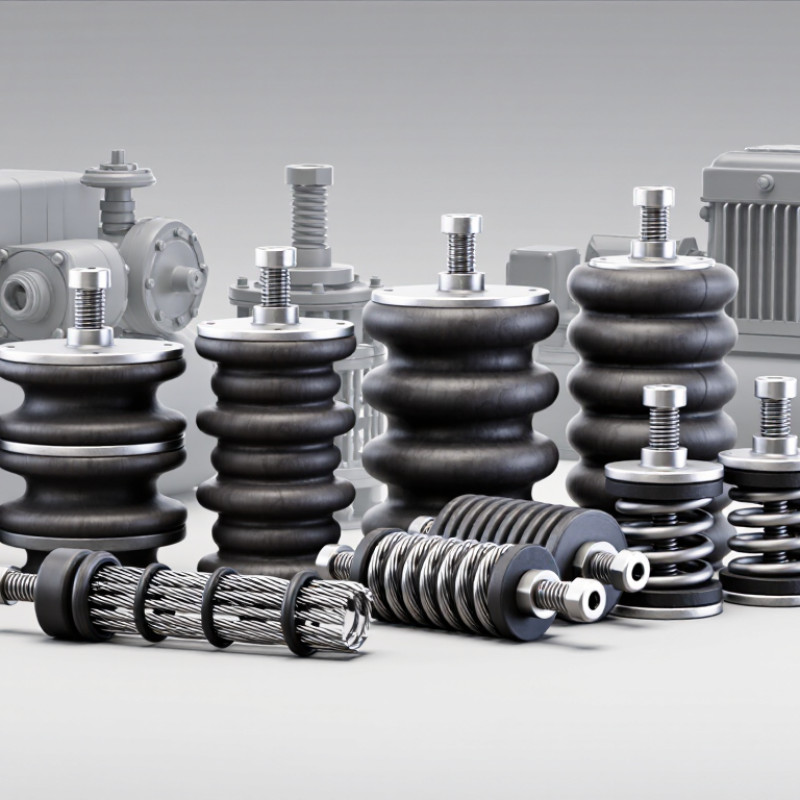
This guide examines ten practical types of Rubber Isolation Mounts to buy, including bonded mounts, bobbin mounts, sandwich mounts, spring mounts, wire-rope isolators, and anti-vibration pads. Each option has strengths and limitations. Some resist shear effectively. Others provide better vertical isolation or easier installation. There is no universal winner. That is easy to overlook. Real-world selection should compare static load, dynamic load, operating temperature, chemical contact, installation space, and expected service life. Manufacturer test data, relevant ASTM specifications, and application experience should support the final decision. Even careful recommendations can fail when actual operating conditions differ from laboratory measurements.
Top 10 Types of Rubber Isolation Mounts to Buy?

What Are Rubber Isolation Mounts and How Do They Work?

Rubber isolation mounts reduce vibration between a machine and its supporting structure. They usually combine an elastomer body with bonded metal plates, studs, or sleeves. The rubber flexes under load, rather than allowing rigid contact. This movement absorbs part of the vibration and limits transmitted noise.

Common designs include bobbin, sandwich, cylindrical, conical, cup, and shear mounts. Each shape handles force differently. Compression mounts carry vertical loads well. Shear mounts manage sideways movement. Conical mounts can control movement in several directions. In practice, selection depends on load, vibration frequency, temperature, and available space. A mount that looks strong may still perform poorly if its natural frequency matches the machine’s operating speed.

The working principle is practical but not effortless. Rubber stiffness supports the equipment, while internal damping changes vibration energy into small amounts of heat. Effective isolation usually requires the operating frequency to remain well above the mount’s natural frequency. Engineers also check static deflection, preload, and uneven weight distribution. A level machine matters. So does correct tightening.

Small details often decide service life. Oil, ozone, heat, and ultraviolet exposure can harden or crack the elastomer. Metal parts may corrode in wet environments. I have seen mounts fail early because installers tightened them off-center. That mistake is easy to miss. Manufacturer load data should be verified under real conditions, not copied from a general chart. Rubber is forgiving, but never unlimited.
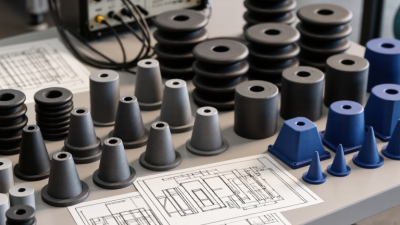
Key Factors for Classifying and Selecting Isolation Mounts

Top 10 Types of Rubber Isolation Mounts to Buy?

Key Factors for Classifying and Selecting Isolation Mounts

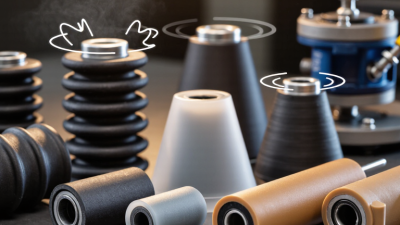
Rubber isolation mounts are classified by shape, loading direction, stiffness, and installation method. Common options include cylindrical, bobbin, sandwich, conical, cup, shear, compression, bonded, engine, and snubber mounts. Each type behaves differently under vibration. A cylindrical mount may suit light equipment, while a bonded mount often handles combined shear and compression loads more reliably. Check the equipment’s weight, operating speed, vibration frequency, and available mounting space before choosing.

Material and environment matter just as much. Natural rubber offers useful resilience, while synthetic compounds may better resist oil, heat, ozone, or outdoor exposure. Select hardness carefully. A mount that feels firm by hand may transmit too much vibration during operation. Load capacity should include dynamic forces, not only the machine’s static weight. In workshop inspections, uneven compression, cracked rubber, and loose fasteners often reveal poor selection. A neat catalog label is never enough.

Tips: Measure the actual load on each mount, including uneven distribution. Confirm the preferred load direction with the supplier’s technical data. Leave room for rubber deflection, bolt access, and future replacement. Avoid mixing different hardness grades without testing. Small details matter. Recheck performance after installation, because real vibration can differ from calculations. Selection is sometimes imperfect, and field measurement may expose assumptions that looked reasonable on paper.

Top 10 Types of Rubber Isolation Mounts to Buy? – Key Factors for Classifying and Selecting Isolation Mounts

No. Rubber Isolation Mount Type Typical Construction Primary Load Direction Typical Static Load Range* Typical Static Deflection* Best-Suited Applications Key Selection Factors
1 Cylindrical Bobbin Mount Rubber cylinder bonded between two parallel metal plates or threaded studs. Compression, with limited shear 20–2,000 N per mount 0.5–3.0 mm Small motors, pumps, fans, control panels and light machinery. Load per mount, rubber hardness, stud size, compression height and temperature.
2 Sandwich Mount A rubber layer bonded between two horizontal metal plates, commonly with central bolts. Compression and shear 100–10,000 N per mount 1–6 mm Compressors, generators, HVAC equipment and industrial frames. Compression-to-shear ratio, bolt spacing, overload stops and required lateral stability.
3 Conical Mount Tapered rubber element bonded to metal plates or studs, often with a conical profile. Compression and controlled lateral movement 500–20,000 N per mount 1–8 mm Heavy machinery, engines, gearboxes and mobile equipment. Vertical load, overturning moment, conical angle, bump-stop clearance and fatigue life.
4 Shear Mount Rubber bonded between metal components so vibration is absorbed mainly through shear deformation. Shear 100–8,000 N per mount 1–10 mm Fans, pumps, electrical cabinets and equipment requiring flexible lateral isolation. Shear stiffness, allowable displacement, creep, preload and vibration frequency.
5 Bonded Rubber Bush Rubber sleeve bonded to an inner metal tube and an outer metal housing. Radial shear and limited axial movement 500–30,000 N per bush 0.5–5 mm Suspension links, machine pivots, brackets and structural joints. Radial and axial stiffness, misalignment, bore diameter, installation interference and wear.
6 Rubber Grommet Mount Flexible rubber ring installed in a panel hole to isolate a fastener or component. Radial compression and light shear 10–500 N per grommet 0.5–3 mm Wiring, small instruments, enclosures and lightweight electronic assemblies. Panel thickness, hole diameter, cable or bolt size, edge protection and ozone resistance.
7 Ring Mount Annular rubber element compressed between washers, sleeves or retaining plates. Axial compression 50–5,000 N per mount 0.5–4 mm Pipe supports, suspension assemblies, brackets and compact equipment. Inner and outer diameter, compression limit, washer geometry, preload and environmental exposure.
8 Rectangular Rubber Mount Flat rectangular rubber pad, optionally bonded to one or two metal plates. Compression and shear 100–15,000 N per mount 1–7 mm Machine bases, rails, cabinets, platforms and structural supports. Pad area, shape factor, surface flatness, compression stress, lateral stability and bonding.
9 Hydraulic Rubber Mount Rubber-metal mount containing fluid chambers and an internal passage for enhanced damping. Multi-directional dynamic isolation 1,000–50,000 N per mount 1–10 mm Vehicle powertrains, engines, compressors and equipment with changing loads. Dynamic stiffness, damping curve, temperature range, fluid compatibility and leakage protection.
10 Progressive Rubber Mount Profiled or multi-stage rubber element designed to become stiffer as deflection increases. Compression with overload control 500–40,000 N per mount 1–12 mm Heavy machinery, vehicle mounts, mobile equipment and shock-prone assemblies. Nonlinear load-deflection curve, shock energy, maximum travel, fatigue and natural frequency.
*Engineering note: Load and deflection values are representative design ranges for general rubber isolation mounts, not guaranteed ratings for every design. Final selection should be based on the manufacturer’s tested load-deflection curves, dynamic stiffness, damping data, safety factor, operating temperature, chemical exposure and required service life.
General selection checklist: Determine the total supported mass, number of mounts, center of gravity, excitation frequency, desired natural frequency, static deflection, shock loads, mounting orientation, available space, fastener requirements and environmental conditions before purchasing.

Top 10 Types of Rubber Isolation Mounts to Buy

Top 10 Types of Rubber Isolation Mounts to Buy?

Choosing the right rubber isolation mount starts with the machine, not the catalog image.

Cylindrical bobbin mounts suit small motors and control cabinets.

Sandwich mounts handle vertical loads beneath pumps, compressors, and compact equipment.

Conical mounts offer better stability when vibration moves in several directions.

Stud mounts install quickly where threaded holes are available.

Female-threaded mounts work well when bolts must enter from above.

Grommet mounts protect panels from light vibration and impact.

Ring mounts fit pipework, brackets, and rotating equipment with limited space.

Spherical mounts allow controlled movement while reducing stress from slight misalignment.

Cup mounts support heavier assemblies and help spread the load.

Rectangular bonded mounts provide broad support under cabinets and frames.

Check the working load before buying. A mount carrying 40 kilograms should not operate continuously at its maximum rating. Measure height, bolt diameter, rubber hardness, and available clearance.

Oil, heat, ozone, and cleaning chemicals can shorten service life, even when the rubber looks intact. A practical test includes checking vibration at startup, normal speed, and shutdown.

Listen for metal contact. It often reveals poor compression or incorrect sizing.

Rubber hardness is not a universal answer. Softer rubber isolates low-frequency vibration better, but it may allow too much movement. Harder rubber controls motion but can transmit more noise.

I have seen mounts selected by size alone, and that approach failed quickly. Recheck the real load distribution, because four mounts rarely share weight perfectly.

Replace cracked, swollen, or permanently compressed mounts before they affect connected parts.

Applications, Advantages, and Limitations of Each Mount Type

Top 10 Types of Rubber Isolation Mounts to Buy?

Rubber isolation mounts solve different vibration problems, not one universal problem. Cylindrical bobbin mounts suit control panels and small pumps. Their compact shape saves space, but lateral movement can remain high. Sandwich mounts handle vertical loads in generators and compressors. They offer predictable compression, although installation height is limited. Conical mounts guide loads more effectively and resist side movement. Their tapered rubber can fatigue under severe misalignment. Shear mounts work well beneath motors because rubber flexes quietly. They need careful orientation. Compression mounts support heavy machinery, but excessive preload can stiffen the system. Bonded mounts join rubber to metal plates, improving durability and reducing slip. However, heat and oil can weaken the bond.

Anti-vibration feet help HVAC units and machine tools. They install quickly, yet they may provide poor control during startup. Engine mounts combine compression and shear resistance for vehicle powertrains. They reduce movement, but replacement requires accurate alignment. Wire-rope mounts tolerate heat and chemicals better than rubber. They usually cost more and transmit some high-frequency vibration. Spring-rubber mounts deliver greater deflection for large equipment. They can become unstable without lateral restraints. Rubber snubbers limit shock travel in suspended systems. Their advantage is impact control, not continuous isolation. The 2024 MarketsandMarkets vibration-control report identifies industrial machinery and transportation as major demand sectors. Meanwhile, the U.S. Department of Energy’s Motor Systems Market Assessment notes motor-driven systems consume about 68% of industrial electricity, making efficient vibration control important.

Tips: Measure static load first. Check rubber hardness, temperature, oil exposure, and natural frequency. ISO 10846 testing data can support transfer-stiffness comparisons. Do not trust catalog load ratings alone. Real foundations are rarely perfect. Expect some compromise.

How to Choose, Install, and Maintain the Right Rubber Mount

Choosing among the top 10 types of rubber isolation mounts starts with the real load, not the catalog picture. Cylindrical, bobbin, sandwich, conical, and ring mounts suit different forces and movement patterns. Check the equipment weight, vibration frequency, temperature, and mounting direction. A mount that handles compression may perform poorly under sideways movement. I have seen a small pump shake because its mounts were selected by size alone. It looked reasonable. It was wrong.

Installation needs the same care. Clean the mounting surfaces and remove paint flakes, oil, and sharp burrs. Support the equipment before removing an old mount. Tighten fasteners evenly, using the specified torque when available. Do not crush the rubber with excessive tightening. Keep the mount aligned with the applied load. A tilted mount can wear quickly. Leave enough clearance for normal movement, especially near pipes, guards, and cable trays. Small gaps matter.

Maintenance should include a visual check every few months, or more often in dusty, hot, or wet areas. Look for cracks, swelling, hardening, loose bolts, and permanent flattening. Touch can help, but it is not a complete inspection. Compare vibration before and after replacement with the same operating conditions. One weakness in my own early checks was relying on appearance alone. Rubber can lose flexibility before damage becomes obvious. Record inspection dates, operating conditions, and replacements. That simple record makes future choices more reliable.